I've always been proud of being Asian. There are the perks of being Asian: black POKER STRAIGHT hair, never having to fake tan, a distinct lack of (or at least reduced amount of) body hair, BIG RED UGLY PIMPLES only looking KINDA BIG RED and UGLY.
But I've never pretended that I wasn't a bad Asian. I love Asian food and I love wearing my hanbok (amazing to cover random lumps and bumps that appear in the gory glory of adolescence) but that is literally about it.
I am an English nut, and this doesn't work so well with the all-Asians-are-good-at-math stereotype. Hell, I couldn't write numbers properly until I was eight and I still struggle with times tables. Now, in Australia, it's really fine to be bad at maths - actually, it's really fine to bad at anything remotely academic. But not if you're me. Not if you go to an elite academic school. Not if you're, well...Asian. With a mother, father and sister who are all freakishly good at maths (at least in my book). My sister got a certificate for maths the other day; don't think I've ever got one of those. The only post my parents got from the maths department about me were LETTERS OF CONCERN.
I don't know why I haven't got the Freaky Asian Maths Gene. I just don't find it remotely interesting, or useful. Before high school I survived THIRTEEN YEARS without having any 'proper decent maths skills'. And you know what? I'm still surviving without 'proper decent maths skills'. I can add up in my head. I know how to round and shit. I know how to use a calculator. So what's the problem?
A lot, apparently. Apparently teenagers have plenty of use for linear equations and algebra and chemical formulas and all that jazz. I never understood it, never saw the point of it and - and here's the lynchpin - I was clever enough to do my own research as to WHEN THE HELL I CAN STOP STUDYING THIS SHIT. I also got very good at IGNORING TEACHERS FOR THE GREATER GOOD. And so, I managed to wiggle out of the math/science shit.
Which makes me a bad Asian.
Any self-respecting Asian would never comprehend why I like Lit. I mean, as an Asian, I'd be expected to be *good* at lit, but it's just one of the many chorey things that Asian kids have to do. But I genuinely love it. I love writing, I love reading, I love arguing. What's not to love?
But that also makes me a bad Asian. Sigh. It's so hard to be good!
The main thing is that I can't speak another language - English is my leading man. I can speak a few words of Korean and even less Chinese but essentially, I can really only properly communicate in English. Which is quite sad, I know, because Korean and Chinese are beautiful languages and it's sad that all I hear is YADIYADIYAH when Chinese people speak. I wish I could communicate in such an elegant, beautiful language, but alas, it is not to be. Which is rather inconvenient in places like Hong Kong, where people will just go YADIYADIYAH at me in Cantonese, to which I reply, in English 'I'm sorry sir/miss, I don't speak Chinese'.
It makes them pause. Stutter. Reconsider the meaning of life. And then.
They make the VERY HELPFUL SWITCH TO MANDARIN!!!! YADIYADIYAH!!!!???? ARRRGH!!!
What shits me is that they never treat white people like this. I don't even look like I should be speaking Cantonese - I have too much Korean blood in me. But places like Hong Kong are a bit like France - they know how to speak English, they just don't wan't to.
Bad Asian Trait No.3495083328489726347: I'm not a huge fan of Asian boys.
I don't get along with Asian boys; Asian boys do not get along with me. Asian boys think I'm too fussy, too bookish, too opinionated, too feminist, too ang-mor (white bastard), not quiet enough, not smart enough, not good looking enough, not skinny enough...the list goes on. I would be a terrible Asian daughter-in-law. Conversely, I'm not in love with Stereotypical Asian Boy Behaviour; and you know what I mean. Only child with a bit of a chubby-cheeks problem, serious mummy issues and Help Me With My Homework Bitch attitude. I just don't like it; I don't like it in any guy, regardless of race. I have a very liberal, Western view towards love and marriage and family life; respect is as important as love, I want a companion, not a master for a husband, and if I have a family then the father will have to PULL HIS WEIGHT. Most of the diehard 'I hate Australia!' Asian boys would not be too happy with the above. I know I'm being stereotypical, but seriously, how long can we hide behind race? It's a generalization, and a horribly cliched one at that, but it's TRUE. I have PROOF.
The last of the Un-Asianess is really quite serious. I absolutely can't stand K-Pop, and I only like historical K-dramas. Shoot me now, I know.
It can be challenging, sometimes, looking one thing and being another. It's hard knowing that you'll never fully fit into the world you've been born into. I know that I'm not fully accepted by the Anglo-Saxon community; I know there'll always be a level of racism and discrimination that I'll just have to forgive and forget. But the hardest thing is not being accepted by those of your heritage; and not being able to reconcile myself with people from my fatherland. The number of times I've been accused of being racist against my own race is ridiculous; but it takes an ABC like me to see the strengths and weaknesses in all races, even my own. We can't hide behind the 'racism' forever; there are race-specific flaws in every race that we must learn to overcome rather than pointing fingers of blame.
Friday, September 16, 2011

Sunday, September 11, 2011
9/11
Today on the tenth anniversary of 9/11 we remember the lives lost and the heroes that were made on that fateful day. We pray for peace and we fight for justice. May we one day find the strength to move on into a brighter future for our children.
Lady Solitaire.
Lady Solitaire.
Shoot to Kill.
I have been an outspoken opponent of the use of Tasers in the police force since they were introduced in Australia. The reason? It's simply barbaric, and could quite literally kill you. Or kill me, anyway.
I have what is known as a second degree heart block, situs inversus and dextrocardia - essentially a heart deformity that requires a pacemaker. I don't really understand how tasers work our how my heart works but the long and short of it is that I've concluded that me plus a stun gun would not equal something pretty. Even if I do something wrong, police officers have no right to shoot me unless I am armed and dangerous. Yet they are allowed to cause what used to be referred to as 'cruel and unusual punishment', maybe just for being then and there. Or at least, they used to call it 'cruel and unusual punishment'. Now they call it 'standard procedure'.
It is the human psyche, when faced with something stressful such as a violent situation or a language barrier, to whip out something that will just uncomplicate matters. In America, it's guns. Here, it's Tasers. Frankly, I don't know which is worse.
I literally start shaking when I see police officers walking around with Tasers. Police officer or not, no human being has the right to have the power to inflict such pain on another human being.
And what's with Tasering someone two, three, up to twenty-eight times? How much of a raging looney was that Aboriginal man who died of a heart complication to warrant twenty-eight Tasers? If he was white it would never have happened, but no, we have a heartless police force with no sense of justice that is not just content with the ability to inflict pain, but the ability to kill lawlessly. We are being kept in check by torturers and murderers.
We used to live in a world of witch-burning and black lynching. Now, we live in a world where we torture the innocent. What is happening that we destroy our humanity? Are they the terrorists, or are we? We all die drenched in blood.
Friday, September 09, 2011
When we swap religion with, well, common freaking sense.
I am so sick of people using religion as an excuse to ban everything that isn't TRADITIONAL or blah blah. Last time I checked, using non-existant friends in a legal or social context was called SCHIZOPHRENIA.
I don't honestly care what God's opinions on gays are, just like I don't honestly care whether God exists or not. All I care is that there are people in this world who are suppressed and denied their basic rights even in the most sophisticated, first-world countries. GAYS.
It bugs me so much that people use religion against gay people - I mean, people have been using religion against That Scum That They Don't Like since the dawn of time - blacks, women, Asians. I'm just so over it. All these people make me think is that God must be some angsty homophobic misogynistic redneck - because religion just seems to favour these people so much, you know?
People consider marriage to be a wholly religious thing; old geezer in bedsheets, church and steeple, etc. But what people don't understand that, especially in this diverse and multicultural world, the religious element is more a personal than legal thing. Nobody actually cares where you get married now, or how you get married; nobody actually cares if you get married at all. What matters is the rights, the responsibilites of marriage - the right to get married in itself. That is the lynchpin of this argument: everyone has the right to marry whoever and however they want. I don't want some Bible-basher to tell me who I can and can't marry.
Our Indoctrination of the Future Generation.
Australia is a conservative country pretending to be liberal, just as Singapore is a dictatorship pretending to be a democracy. Anyone who thinks otherwise clearly doesn't have a human IQ.
There's something pure and innocent about children; something we cannot recreate no matter how charitably and chastely we try to live. I was in daycare from six months to four years, and I don't remember ever being bullied. Sure, I was lonely, but that was pretty much my own fault. I've been a loner since I was born.
Children are born so whole and loving. Sure, children are egocentric - it's a psychological state that we can do nothing to change - but they love freely and unconditionally, they don't judge or accuse; that is the true, raw beauty of humanity. Innocence is bliss.
But in pre-primary and primary school things started to change. Sweet innocence was replaced with dangerous ignorance, but the shocking thing is that they were marketed as one and the same. Children were old enough to be indoctrinated, but not old enough to reason. There were boys abusing girls before they truly understood gender roles. There were children preaching God before they knew what God was. Children picking on 'poofs' and 'fags' before they even knew the facts about homosexuality. They formed ideas about race before they had evidence to back the stereotypes. The 'pretty' girls got 'boyfriends' and taunted the 'ugly' girls (you can guess which category I fit into). Horrible, adult things like that.
Children are so easily influenced, so easily swayed, too easily fooled into believing without truly committing - or perhaps it is the other way around; I think the saddest thing is when I see children committing to a God without truly believing in Him. Parents are blessed with the truly wonderful task of raising children to be gentle, diligent citizens who have their own independent opinions, but respect both the opinions of others and the right for others to form their own opinions. A parent should never dare to tell their children what to think; a parent should be chiefly employed in teaching their children just to think in the first place.
Australia has become so narrowminded and shortsighted. We don't think, we don't believe, we don't care, we don't commit. We don't see things the way the world does; we're so obsessed with our little bubble of money and our warped reasoning of right and wrong. I'll teach my children not to spend their lives being a colour. Every night I pray for those trapped in the blindness of indoctrinated, outdated beliefs. I pray that religion and society can become more open-minded, more tolerant and accepting. I'll teach my children the beauty of life and parenthood; the uniqueness of men and women. I'll teach my children to think and to care; about what I don't really mind. I'll teach my children to be proud of themselves and to aim to live in a world that they're proud of; I'll teach my children to respect other opinions and people from different walks of life. But at the moment, I'm teaching myself to pray for the indoctrinated - children who grow into narrowminded, shortsighted clones of their narrowminded, shortsighted parents who are unable/unwilling to know any better.
Thursday, September 08, 2011
Pluck a Rose, Snap a Lily.
As I lay broken on the ground,
It's hard to see you turn around and
Pluck another rose.
As I grow strong and touch the sky,
It's sad to see you turn around and
Snap another lily.
Will this rose be as sweet to you,
As I was when I was a bud?
Will you love her when she's in full bloom,
Then toss her in the mud?
You saw a lily floating down
A river of tears and laughter;
You picked her up
And without a second glance,
You crushed me in your hand and drowned her.
How quick you are to replace perfection,
How quick you are to regain affection;
You took me in
And bled me dry,
But I'm just another flower for you to kiss goodbye.
For me,
Love is a luxury;
I am a pauper in this land of plenty.
I've yet to replace you, my love:
I'm yet to find a gamekeeper as cruel as you;
I've yet to find a gardener as cold as you.
I'm yet to find a man with fresh blood on his hands.
But as that rose wilts,
This rose, stained scarlet,
Still shines.
And as that lily dies,
This lily is still white;
This lily, my love,
Remains alive.
For a dear friend,
And a sworn enemy;
I was a fool to pluck my rose too soon,
A fool to snap my lily.
Inspired by 'A Daughter of Eve' by Christina Rossetti
Monday, September 05, 2011
Can of Worms #9
Worm #19: Is it OK to smack your child?
The long and short of it: No.
My say: Corporal punishment is a violent means of instilling fear in your child and leads to an unhealthy parent-child relationship based on terror rather than respect. There are plenty of ways in which discipline can be successfully enforced without physical means; my parents never hit me and I never became a juvenile delinquent. I've babysat toddler cousins before; I've never had the slightest inclination to hit them. I know it doesn't really compare to 24/7 parenting, but nonetheless children as young as two can be reasoned with when a) they're not in the throes of a tantrum and b) you do it properly. If your child is really too young to understand reasoning, then they're definitely too young to be smacked. Smacking is outdated and completely useless; not to mention it violates many federal laws and basic human rights. Children retain things much longer than adults; things that adults forget in six seconds turn into lifelong grudges in children, and it is unhealthy for children to view their parents in any other way than with love and respect. Being a parent is a priviledge; a difficult priviledge, I'll admit, but your child has only you to turn to for love and support, and smacking is a surefire way to destroy that bond. Any parent who hits their child is disgusting, unfit to be a parent and is a perpetrator of child abuse.
It's sad that men are more likely to smack their children than women (Can of Worms). Children, especially girls, should learn to have both a healthy respect and a great affection for men, and should always be exposed to friendly, loving relationships with men, particularly her father. Fathers don't know how much one loud word or one smack can damage their child - and I know from experience.
Worm #20: If a woman has had a boob job, is it an open invitation to look at them?
The long and short of it: No.
I don't really approve of cosmetic surgeries, particularly because I take surgeries very seriously - it's scarring, going through that when you're five. But, I respect every person's right to do whatever they want with their bodies, and their rights shouldn't be forfeited just because they get some work done. I say this because it is not civil to stare at large chested women - you know, larger women, pregnant and breastfeading women, etc - and how can you be 200% sure that the woman you're ogling at is fake, and therefore it's okay? There's no true way of telling. Also, not everyone with a boob job gets it for pure cosmetic reasons - many women get them as a result of masectomies, inverted nipples etc. If you don't know, don't look.
Do women like being looked at? To be honest, sometimes. We're very aware of the social and biological impact of boobs. But it's not the be all and end all of everything - it's just one of the many things that add up to make a woman physically attractive or unattractive. And there's a different between looking and leering - I go to a co-ed high school, and trust me, teenagers look everywhere all the time. But if it's more than a brief glance and the guy is well, not really Gen-Y then that's just...creepy.
Would I get a boob job? Probably not. I say this because I'm terrified of surgeries and I hate hospital, and even though it's inevitable in my lifetime I would rather not go voluntarily. I would only do it if my appearance was so unflattering it was affecting me psychologically - but I doubt it. Genetics tells me that I won't end up looking so bad, and I think my self esteem can endure not having melon breasts. Actually, I think my self esteem would be a good deal healthier without melon breasts.
The long and short of it: No.
My say: Corporal punishment is a violent means of instilling fear in your child and leads to an unhealthy parent-child relationship based on terror rather than respect. There are plenty of ways in which discipline can be successfully enforced without physical means; my parents never hit me and I never became a juvenile delinquent. I've babysat toddler cousins before; I've never had the slightest inclination to hit them. I know it doesn't really compare to 24/7 parenting, but nonetheless children as young as two can be reasoned with when a) they're not in the throes of a tantrum and b) you do it properly. If your child is really too young to understand reasoning, then they're definitely too young to be smacked. Smacking is outdated and completely useless; not to mention it violates many federal laws and basic human rights. Children retain things much longer than adults; things that adults forget in six seconds turn into lifelong grudges in children, and it is unhealthy for children to view their parents in any other way than with love and respect. Being a parent is a priviledge; a difficult priviledge, I'll admit, but your child has only you to turn to for love and support, and smacking is a surefire way to destroy that bond. Any parent who hits their child is disgusting, unfit to be a parent and is a perpetrator of child abuse.
It's sad that men are more likely to smack their children than women (Can of Worms). Children, especially girls, should learn to have both a healthy respect and a great affection for men, and should always be exposed to friendly, loving relationships with men, particularly her father. Fathers don't know how much one loud word or one smack can damage their child - and I know from experience.
Worm #20: If a woman has had a boob job, is it an open invitation to look at them?
The long and short of it: No.
I don't really approve of cosmetic surgeries, particularly because I take surgeries very seriously - it's scarring, going through that when you're five. But, I respect every person's right to do whatever they want with their bodies, and their rights shouldn't be forfeited just because they get some work done. I say this because it is not civil to stare at large chested women - you know, larger women, pregnant and breastfeading women, etc - and how can you be 200% sure that the woman you're ogling at is fake, and therefore it's okay? There's no true way of telling. Also, not everyone with a boob job gets it for pure cosmetic reasons - many women get them as a result of masectomies, inverted nipples etc. If you don't know, don't look.
Do women like being looked at? To be honest, sometimes. We're very aware of the social and biological impact of boobs. But it's not the be all and end all of everything - it's just one of the many things that add up to make a woman physically attractive or unattractive. And there's a different between looking and leering - I go to a co-ed high school, and trust me, teenagers look everywhere all the time. But if it's more than a brief glance and the guy is well, not really Gen-Y then that's just...creepy.
Would I get a boob job? Probably not. I say this because I'm terrified of surgeries and I hate hospital, and even though it's inevitable in my lifetime I would rather not go voluntarily. I would only do it if my appearance was so unflattering it was affecting me psychologically - but I doubt it. Genetics tells me that I won't end up looking so bad, and I think my self esteem can endure not having melon breasts. Actually, I think my self esteem would be a good deal healthier without melon breasts.
If you have any worms that you would like me to respond to, please email or comment below.
Dear Mummy.
I've been blogging for three years now. I've been bullied for much, much longer than that. And I try to pretend to be okay with it, really, I do. But when you cry yourself to sleep, when you fly into murderous rages you know deep down that you're really not okay with it. I'm tired of being picked on, mummy. I'm tired of being told that I'm wrong and they're right. I'm tired of being squashed.
All I've ever wanted to do is write. I've been writing since I was a little girl, and it's the only thing I'm good at. I want to make people happy; I want people to read my writing and learn, and to laugh and cry. It makes me happy when people enjoy what I write. And when this is your whole life, it hurts when people are so callous.
People forget that people on the net are, well, people. I'm only fifteen, and I've been sick and lonely for a lot of my life. I was bullied a lot as a kid, and people don't understand mental disorders and depression in young children. So I battled it out alone.
It was this blog that kept me strong. It was ranting and raving and whining on this blog that made me brave. And as I got older my opinions got bolder, and I post them here, on this blog, to make a stand; to tell the world what I think. So many people do this, mummy; so many people make big changes by writing. but it seems like every time I do, I get attacked for being...well, for just being me. I can be strong and brave, mummy, but I'm tired. I'm tired of being picked on. I wish people could see my point of view, understand where I'm coming from, agree to disagree. But they don't. All they do is call me ignorant and stupid when I've probably had more education than any of them ever had.
I wish all this stuff didn't affect me that way it does, mummy. But it does. But I'll keep pretending - for you, mummy. It's the art of being a woman; it's the art of being a writer.
Saturday, September 03, 2011
Emma: A Student's Guide.
Emma by Jane Austen has the unfortunate reputation of being the most boring high school and college novel to study. At first, I was not enthusiastic about studying it at all; I tried reading it in the summer holidays before year eleven, but couldn't really hack into it. But now we're actually studying it, I'm beginning to really enjoy it.
One thing that puts Emma off modern audiences is that it's character driven, not plot driven. This is true for most of Austen's novels, because of the genre in which she write (comedy of manners) - this has established her reputation as a sharp critique of human personality and social interaction. However, Emma is by far the most character-driven Austen novel, made even more difficult to swallow because a) it happens in a world so far removed from our own b) most of the exciting stuff appears to have happened before the book (deaths, weddings, adoptions etc.) and c) nothing much actually happens in Emma; it's a personal discovery, not a physical journey.
Often people run into trouble when studying novels because they approach it in the wrong manner. When studying a novel, it is important to read it differently than if you were reading it for pleasure. Before studying it always pays to read the book cover to cover, or if this is too difficult to swallow read a synopsis (Wikipedia is always good for plain, sensible language) and watch an adaptation before attempting to read - this gets the storyline in your head and puts faces to characters. Newer adaptations are always easier on the modern eye, but the trade off is that they are often heavily compressed and romanticized - older adaptations from the traditional documentary era are normally meticulously faithful to the text, but are often long winded, badly acted, slow-paced, endlessly boring and old fashioned. For Emma, I've found that the 2009 BBC adaptation is excellent as it is set at a brisk pace, but is extremely faithful to the novel and the characterization is excellent. Remember, when you study a novel you are studying the text, not the plot - and this is why Emma is considered such a good study novel, because the language and characters are so much more important than the plot. So don't be afraid to read spoilers, or flip to the back of the book so that you know that it finally ends sooner or later.
I'm adding pictures from the recent 2009 adaptation because I think it's important to have a vivid image of what things look like inside your head - and what they exactly look like is neither imperative to the novel or the study of it.
SETTING: Emma is set in the country - where most of the gentry resided when not 'at business' in 'town' (London) - near a fictional town called Highbury, which is in Surrey (which is real). Most of the characters are of gentry class, or former members of the gentry.
CHARACTERS:

HARTFIELD ESTATE - Residence of the Woodhouse Family.
The Woodhouse Family is, aside from the Knightley Family, the most socially elite family in Highbury. Based on Emma's dowry, the annual income of the Woodhouse Family is about 20,000 pounds (about 2 million in today's money). The Woodhouse family home, Hartfield, is considered the heart of Highbury and attracts all the worthy company in the neighbourhood - Mr Knightley walks there almost every day. The characters in Emma from the Woodhouse family are Mr Woodhouse, Emma Woodhouse and Isabella Knightley.

Miss EMMA WOODHOUSE
Emma Woodhouse is the heroine of the story, and is Jane Austen's wealthiest and most socially elite heroine, being the heiress to 30,000 pounds (about 3 million) (in comparison, Lizzy Bennet's dowry is only 1000 pounds, or 10,000 pounds in today's money). Emma is twenty-one and kind-hearted, pretty and intelligent, but also spoiled, meddlesome and haughty, spending much of her time meddling in the love lives of the people of Hertfield.

Mr WOODHOUSE, Esq.
Mr Woodhouse is a wealthy widower and father to Isabella and Emma Woodhouse. A pessimistic, old-fashioned hypochondriac, Mr Woodhouse is an affectionate, if overbearing father with little patriarchal authority who delights in spoiling his children and grandchildren. He is also 'gently selfish', unable to see things from another point of view.

Mrs ISABELLA KNIGHTLEY (Miss ISABELLA WOODHOUSE)
Isabella Woodhouse is Emma's elder sister and at twenty-eight is seven years her senior; married to John Knightley and mother to five children: Henry, Little John, Bella, Little Emma and Little George. She is motherly and domestic, and not Emma's intellectual equal.

DONWELL ABBEY - Residence of the Knightley Family
The Knightley Family is the most socially elite family in Highbury, based in the family residence of Donwell Abbey, which is only a mile off from Hartfield. When the book begins only George Knightley, as the eldest son, lives at Donwell - his younger brother and family, as is custom, move to town to on their own estate. The characters in Emma from the Knightley family are Mr Knightley, John Knightley, Isabella Knightley, and John and Isabella's children Henry, Little John, Bella, Little Emma and Little George.

Mr GEORGE KNIGHTLEY, Esq.
Mr Knightley is the wealthiest gentleman in Highbury, being the master of the richest estate in Highbury. A close friend of the Woodhouse family, he is the brother-in-law of the Woodhouse sisters through is younger brother's marriage to Emma's sister. About thirty-seven at the beginning of the novel, Mr Knightley is wise, compassionate, intelligent, gentle and paternalistic, and serves as a father figure to Emma, his oldest friend, whom he deems silly and immature.

Mr JOHN KNIGHTLEY, Esq.
John Knightley is Mr Knightley's younger brother, and lives in a London estate with his family in the absence of an inherited property. He is an indulgent family man who gives in to his family's desires for holidays, outings, visitors, and visits to Highbury at the expense of his desire for a quiet family life. Like Emma, he has a shrewd eye for matchmaking, but does not often interfere.

RANDALLS ESTATE - Residence of the Weston Family
Randalls Estate is the neighbouring property of Hartfield, being the new residence of the recently wealthy Mr Weston.

MR WESTON, Esq.
A sanguine, placid, optimistic man, Mr Weston is a widower and father of Frank Churchill. Married beyond his means to a spoiled, wealthy young woman who ruined both herself and her husband before her death, Mr Weston is nonetheless a well-liked and respected man in Highbury, especially after his unexpected marriage to Emma's former governess Anne Taylor.

Mrs ANNE WESTON (Miss ANNE TAYLOR)
Anne Taylor is the former governess of Isabella and Emma Woodhouse, appointed after the death of their mother. To the distress of Mr and Emma Woodhouse, Miss Taylor marries Mr Weston and moves half a mile away to Randalls Estate.

Mr FRANK WESTON CHURCHILL
Flamboyant, fashionable and fiery, Frank Churchill is the son of Mr Weston and the nephew of his aunt and guardian, Mrs Churchill. Confined by his sickly but controlling aunt, he has grown into a good-natured but impatient, reckless, impulsive and accidentally selfish man.

Mrs CHURCHILL
The estranged sister of Mr Weston's first wife, Mrs Churchill adopts Frank Weston and keeps him away from his father and from Highbury, whom she sees as below the prosperous Churchill family.
THE VICARAGE - Parsonage of the Elton Family
Most country towns like Highbuy had a single church, with a modest house provided for the vicar called a parsonage. A vicar or clergyman was a good catch for a modest girl, but most aimed to improve their fortunes through marrying higher, using their religious education as social leverage. The residents at the vicarage are Mr Elton and his wife, Augusta.

Mr PHILIP ELTON
An ambitious, charming and charismatic young vicar; an eager social climber with sights on a beautiful bride with a large dowry; i.e. Emma.

Mrs AUGUSTA ELTON (Miss AUGUSTA HAWKINS)
A moneyed young woman from Bath, Mrs Elton is pretensious, irritating, flamboyant, condescending and patronizing; an equal match for her husband. She treats the country folk with disdain, even though she is amongst her social superiors with members of the landed gentry. Her treatment of her social inferiors Harriet Smith and Jane Fairfax inspires the people of Hartfield to be more sympathetic towards them.
THE BATES FAMILY
The Bates Family was formerly a member of the gentry before they fell on hard times and plunged, without a solid income or a patriarch, into relative poverty. The characters in the book belonging to the Bates family are Mrs Bates, Miss Bates and Jane Fairfax.

Miss BATES
A talktative, dimwitted but kind-natured spinster, the eldest daughter of Mrs Bates and the aunt of Jane Fairfax.

Mrs BATES
The mother of Miss Bates and the grandmother of Jane Fairfax; she does not talk. Ever. As in, never.

MISS JANE FAIRFAX (Mrs JANE WESTON CHURCHILL)
The orphaned niece of Miss Bates and only granddaughter of Mrs Bates, Jane Fairfax was sent away to become a ward of a wealthy family friend. Unlike Emma, she has no fortune of her own and so must become a governess, even though, as a gentleman's daughter, it is below her station. Shy, reserved and passive, Emma is jealous of Jane because of her accomplishments and the sympathy she attracts due to her poverty.
OTHERS:

Miss HARRIET SMITH (Mrs HARRIET MARTIN)
The 'natural' (illegitimate) daughter of someone-or-other, Harriet i had been brought up at Mrs Goddard's school in Highbury as a parlour boarder - a wealthy student who is elevated above the rest and given special priviledges. Despite her illegitimacy she has been comfortably brought up, with her anonymous family providing her generously, but she has no dowry and must stay at the school or leave and earn her keep as a governess. She is pretty and good natured, but unsophisticated and not intellectual. After the departure of Anne Taylor she becomes Emma's protege and companion; Emma is convinced that she deserves to be a gentleman's wife, and goes about making sure that happens.

Mr ROBERT MARTIN
A gentleman-farmer who is considered by Emma to be her, and therefore Harriet's social inferior. He is intelligent, sensible, practical, warm and generous, but Emma is convinced that he lacks class despite evidence otherwise. He lives with his sisters and is in love with Harriet Smith.
SYNOPSIS:
After the death of their mother, Isabella and Emma Woodhouse grow up in the comforts of Highbury with their affectionate father and doting governess, Anne Taylor. Other children in Highbury are not so lucky; after the death of his mother, Frank Weston is adopted by his aunt Mrs Churchill and removed from his father and from Highbury. After the death of both her parents, Jane Fairfax's well-meaning aunt sends her to be the ward of a wealthy family friend, and she grows up away from her family and from Highbury as the companion and chaperone of a wealthy girl, knowing that she will eventually have to leave their hospitality and make her own way in the world.
After her sister Isabella's marriage to family friend John Knightley, twenty-one year old Emma Woodhouse finds herself mistress of her father's house, her hypochondriac father's chief carer and enjoys the luxury of country gentry living and the assurance of independent wealth. Because of this, Emma is uninterested in marriage, instead preferring to play matchmaker to the residents of Highbury.
After the marriage of her governess Anne Taylor to their recently-wealthy neighbour Mr Weston (for which Emma takes credit for arranging), she takes on the pretty, unsophisticated parlour boarder Harriet Smith as her companion and protege. Despite Harriet's lack of fortune and family, illegitimacy and unsophisticated manner, Emma's class prejudice makes it inconceivable to her that any friend of hers deserves anything less than to be a gentleman's wife.
Emma attempts to match Mr Elton, the dashingly handsome vicar with Harriet, and convinces her to reject a marriage proposal from gentleman-farmer Robert Martin. Mr Knightley, Emma's brother-in-law and father/brother figure, chastises her for being narrow minded about Robert Martin's situation and unrealistic in her matchmaking for Harriet Smith, pointing out that Mr Elton is thoroughly aware of his good looks and social standing and would wish to seek a rich bride. Emma ignores this, and continues to encourage what she sees as a growing attachment between Mr Elton and Harriet, and Harriet becomes infatuated with Mr Elton and his charms.
Soon, however, Emma realizes the truth of Mr Knightley's words when Mr Elton instead professes his love to Emma and attempts to propose, despite her protests that Harriet is a much more suitable candidate. Thus Emma's attempt at matchmaking ends up with all three parties hurt; Mr Elton is offended at the idea of Harriet being considered his equal, and leaves Highbury only to return with the wealthy Augusta Hawkins from Bath in tow as his bride; Emma is humiliated at her misunderstanding and furious that Mr Elton's attraction was purely based on her wealth and social standing; Harriet is heartbroken at being rejected in favour of her friend and then abandoned completely by Mr Elton.
Whilst attempting to comfort Harriet, Highbury encounters two newcomers: Mr Frank Churchill, Mr Weston's son, and Jane Fairfax, Miss Bates' niece. Emma is attracted to the fashionable and flamboyant Frank Churchill and spends much time with him, at the expense of her friendship with Mr Knightley, who is accustomed to walking to Hartfield every day to spend time with Emma, who is sixteen years his junior. Mr Knightley is suspicious of Frank's apparently unusual behaviour - such as travelling all the way to London for a haircut - and it is implied that he is jealous of Frank and his relationship with Emma. Emma receives Jane Fairfax with less enthusiasm; despite her lack of funds Jane is beautiful and accomplished, and Emma is both irritated by her cool reserve and jealous of her accomplishments.
Mr Knightley, compassionate by nature, is sympathetic and caring towards Jane Fairfax, and Mrs Weston suspects that it is due to a romantic attachment; Mr Knightley being relatively old and unmarried, is wealthy enough not to require a rich bride but socially elite enough to desire a well-bred wife. Mrs Weston and others also assume that Frank and Emma are becoming romantically attach; Emma resists both assumptions, as she cannot imagine Mr Knightley taking a wife and imagines Frank to be a potential suitor for Harriet.
Mrs Elton turns out to be the most disagreeable woman imaginable, looking down on country folk and country living, even though Emma and Mr Knightley are arguably her social and financial superiors. Because of her condescending attitude towards Jane Emma begins to treat her with more kindness and respect; at a ball Mr Knightley offers to dance with Harriet after she is humiliated by Mrs Elton and snubbed by Mr Elton. The next day Frank saves Harriet from gypsy beggars and brings her to Emma; Harriet tells Emma that she has fallen in love with a man who saved her and is above her station, and Emma assumes she means Frank.
Knightley begins to suspect that Frank and Jane may have a secret understanding and warns Emma not to become too attached to Frank; Emma ignores him and, on an outing to Box Hill she flirts with Frank and insults Miss Bates, who is kind-hearted but dimwitted and incessantly talkative. Mr Knightley reprimands Emma and she weeps, and attempts to make up for her insult.
After news comes that Frank's aunt Mrs Churchill had died, it is revealed that he and Jane Fairfax have been secretly engaged since before their arrival at Highbury; Frank's attentions to Emma have just been to conceal the engagement, which would not have been approved of by his aunt. Emma is furious that she has, once again, been used; but realizes that she was never truly in love with Frank, and so no real harm has been done. Emma expects Harriet to also be heartbroken at the engagement, but Harriet instead says that she was referring to Mr Knightley, not Frank, and now believes that Mr Knightley returns the favour. Emma then finally realizes that she is in love with Mr Knightley, and has been all along, but due to her own meddling she has lost her opportunity to be with him.
Emma expects Mr Knightley to admit his affection for Harriet, but instead declares his love for Emma, and his disgust at Frank's behaviour. Frank and Jane earn the forgiveness of the Westons and the Woodhouses and marry; Emma and Mr Knightley get engaged, and Robert Martin proposes a second time to Harriet, who accepts. The novel ends with the marriage of Harriet and Robert Martin and Emma and George Knightley.
And there you have it.
THINGS TO NOTICE IF IT GETS REALLY BORING:
1. The relationship between Emma and Knightley

This is perhaps the most interesting element of the book - the curious, kind of paedophilic mildly incestuous relationship between Emma and Knightley. I don't really see it that way, but there are Knightley haters that do.
Mr Woodhouse is not the archetypal patriachal backbone of his family, being elderly, frail and an obsessive hypochondriac; Mr Knightley is therefore introduced as both a father substitute and an elder sibling substitute, especially with the marriage and departure of Emma's sister Isabella. Mr Knightley is introduced as being wealthy, sensible, fatherly and, well, old - sixteen years older than Emma. This age gap is further widened by the fact that his younger brother is married to her elder sister. He also takes on the role of a parent, chastising and disciplining Emma when necessary. In the end, though, Knightley is the only one of Emma's love interests who truly cared for her; Mr Elton was only interested in her money and Mr Churchill only used her to cover up his secret betrothal. However, Knightley makes no secret of his attraction to Emma, claiming that he 'loves to look at her' and 'has been in love with her since she was thirteen years old' - this is slightly creepy in an Austen book. What do you think? Should Emma really marry her daddy substitute?
More to come...I'm gonna go hit the sack.
One thing that puts Emma off modern audiences is that it's character driven, not plot driven. This is true for most of Austen's novels, because of the genre in which she write (comedy of manners) - this has established her reputation as a sharp critique of human personality and social interaction. However, Emma is by far the most character-driven Austen novel, made even more difficult to swallow because a) it happens in a world so far removed from our own b) most of the exciting stuff appears to have happened before the book (deaths, weddings, adoptions etc.) and c) nothing much actually happens in Emma; it's a personal discovery, not a physical journey.
Often people run into trouble when studying novels because they approach it in the wrong manner. When studying a novel, it is important to read it differently than if you were reading it for pleasure. Before studying it always pays to read the book cover to cover, or if this is too difficult to swallow read a synopsis (Wikipedia is always good for plain, sensible language) and watch an adaptation before attempting to read - this gets the storyline in your head and puts faces to characters. Newer adaptations are always easier on the modern eye, but the trade off is that they are often heavily compressed and romanticized - older adaptations from the traditional documentary era are normally meticulously faithful to the text, but are often long winded, badly acted, slow-paced, endlessly boring and old fashioned. For Emma, I've found that the 2009 BBC adaptation is excellent as it is set at a brisk pace, but is extremely faithful to the novel and the characterization is excellent. Remember, when you study a novel you are studying the text, not the plot - and this is why Emma is considered such a good study novel, because the language and characters are so much more important than the plot. So don't be afraid to read spoilers, or flip to the back of the book so that you know that it finally ends sooner or later.
I'm adding pictures from the recent 2009 adaptation because I think it's important to have a vivid image of what things look like inside your head - and what they exactly look like is neither imperative to the novel or the study of it.
SETTING: Emma is set in the country - where most of the gentry resided when not 'at business' in 'town' (London) - near a fictional town called Highbury, which is in Surrey (which is real). Most of the characters are of gentry class, or former members of the gentry.
CHARACTERS:
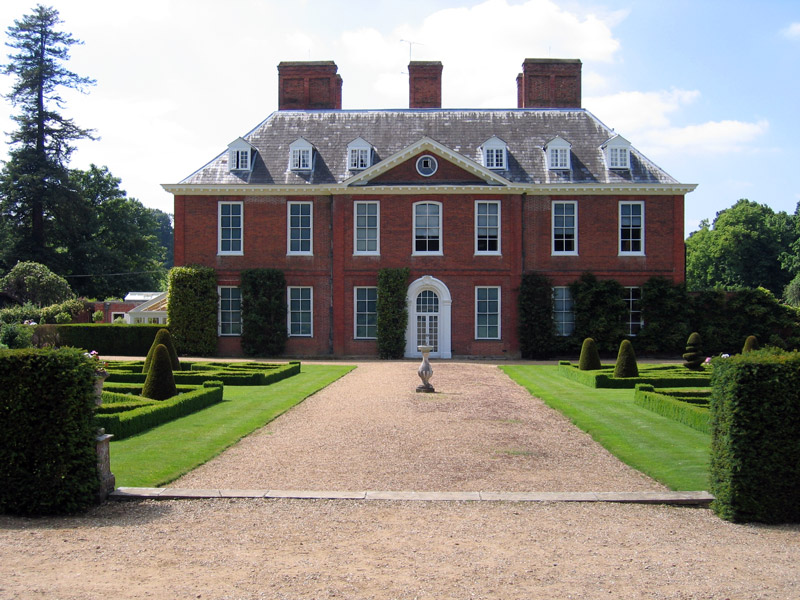
HARTFIELD ESTATE - Residence of the Woodhouse Family.
The Woodhouse Family is, aside from the Knightley Family, the most socially elite family in Highbury. Based on Emma's dowry, the annual income of the Woodhouse Family is about 20,000 pounds (about 2 million in today's money). The Woodhouse family home, Hartfield, is considered the heart of Highbury and attracts all the worthy company in the neighbourhood - Mr Knightley walks there almost every day. The characters in Emma from the Woodhouse family are Mr Woodhouse, Emma Woodhouse and Isabella Knightley.

Miss EMMA WOODHOUSE
Emma Woodhouse is the heroine of the story, and is Jane Austen's wealthiest and most socially elite heroine, being the heiress to 30,000 pounds (about 3 million) (in comparison, Lizzy Bennet's dowry is only 1000 pounds, or 10,000 pounds in today's money). Emma is twenty-one and kind-hearted, pretty and intelligent, but also spoiled, meddlesome and haughty, spending much of her time meddling in the love lives of the people of Hertfield.
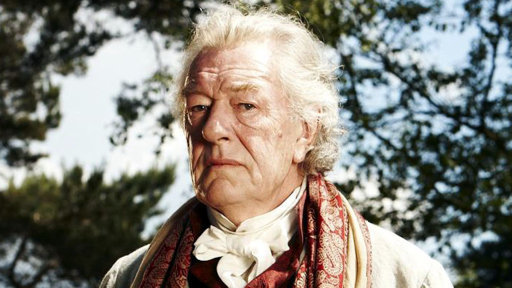
Mr WOODHOUSE, Esq.
Mr Woodhouse is a wealthy widower and father to Isabella and Emma Woodhouse. A pessimistic, old-fashioned hypochondriac, Mr Woodhouse is an affectionate, if overbearing father with little patriarchal authority who delights in spoiling his children and grandchildren. He is also 'gently selfish', unable to see things from another point of view.
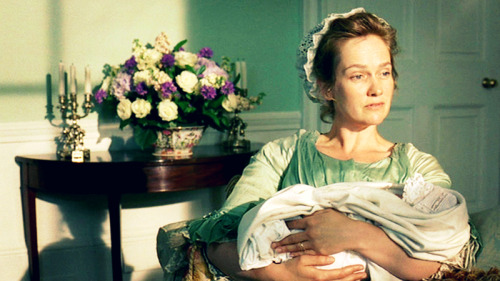
Mrs ISABELLA KNIGHTLEY (Miss ISABELLA WOODHOUSE)
Isabella Woodhouse is Emma's elder sister and at twenty-eight is seven years her senior; married to John Knightley and mother to five children: Henry, Little John, Bella, Little Emma and Little George. She is motherly and domestic, and not Emma's intellectual equal.

DONWELL ABBEY - Residence of the Knightley Family
The Knightley Family is the most socially elite family in Highbury, based in the family residence of Donwell Abbey, which is only a mile off from Hartfield. When the book begins only George Knightley, as the eldest son, lives at Donwell - his younger brother and family, as is custom, move to town to on their own estate. The characters in Emma from the Knightley family are Mr Knightley, John Knightley, Isabella Knightley, and John and Isabella's children Henry, Little John, Bella, Little Emma and Little George.

Mr GEORGE KNIGHTLEY, Esq.
Mr Knightley is the wealthiest gentleman in Highbury, being the master of the richest estate in Highbury. A close friend of the Woodhouse family, he is the brother-in-law of the Woodhouse sisters through is younger brother's marriage to Emma's sister. About thirty-seven at the beginning of the novel, Mr Knightley is wise, compassionate, intelligent, gentle and paternalistic, and serves as a father figure to Emma, his oldest friend, whom he deems silly and immature.
Mr JOHN KNIGHTLEY, Esq.
John Knightley is Mr Knightley's younger brother, and lives in a London estate with his family in the absence of an inherited property. He is an indulgent family man who gives in to his family's desires for holidays, outings, visitors, and visits to Highbury at the expense of his desire for a quiet family life. Like Emma, he has a shrewd eye for matchmaking, but does not often interfere.
RANDALLS ESTATE - Residence of the Weston Family
Randalls Estate is the neighbouring property of Hartfield, being the new residence of the recently wealthy Mr Weston.

MR WESTON, Esq.
A sanguine, placid, optimistic man, Mr Weston is a widower and father of Frank Churchill. Married beyond his means to a spoiled, wealthy young woman who ruined both herself and her husband before her death, Mr Weston is nonetheless a well-liked and respected man in Highbury, especially after his unexpected marriage to Emma's former governess Anne Taylor.

Mrs ANNE WESTON (Miss ANNE TAYLOR)
Anne Taylor is the former governess of Isabella and Emma Woodhouse, appointed after the death of their mother. To the distress of Mr and Emma Woodhouse, Miss Taylor marries Mr Weston and moves half a mile away to Randalls Estate.

Mr FRANK WESTON CHURCHILL
Flamboyant, fashionable and fiery, Frank Churchill is the son of Mr Weston and the nephew of his aunt and guardian, Mrs Churchill. Confined by his sickly but controlling aunt, he has grown into a good-natured but impatient, reckless, impulsive and accidentally selfish man.
Mrs CHURCHILL
The estranged sister of Mr Weston's first wife, Mrs Churchill adopts Frank Weston and keeps him away from his father and from Highbury, whom she sees as below the prosperous Churchill family.
THE VICARAGE - Parsonage of the Elton Family
Most country towns like Highbuy had a single church, with a modest house provided for the vicar called a parsonage. A vicar or clergyman was a good catch for a modest girl, but most aimed to improve their fortunes through marrying higher, using their religious education as social leverage. The residents at the vicarage are Mr Elton and his wife, Augusta.

Mr PHILIP ELTON
An ambitious, charming and charismatic young vicar; an eager social climber with sights on a beautiful bride with a large dowry; i.e. Emma.

Mrs AUGUSTA ELTON (Miss AUGUSTA HAWKINS)
A moneyed young woman from Bath, Mrs Elton is pretensious, irritating, flamboyant, condescending and patronizing; an equal match for her husband. She treats the country folk with disdain, even though she is amongst her social superiors with members of the landed gentry. Her treatment of her social inferiors Harriet Smith and Jane Fairfax inspires the people of Hartfield to be more sympathetic towards them.
THE BATES FAMILY
The Bates Family was formerly a member of the gentry before they fell on hard times and plunged, without a solid income or a patriarch, into relative poverty. The characters in the book belonging to the Bates family are Mrs Bates, Miss Bates and Jane Fairfax.
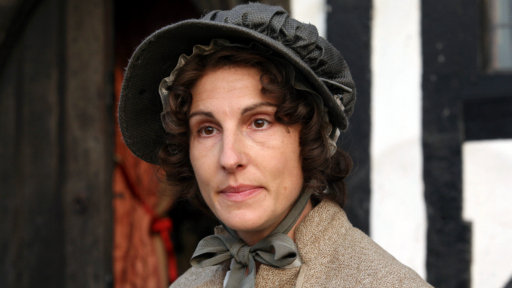
Miss BATES
A talktative, dimwitted but kind-natured spinster, the eldest daughter of Mrs Bates and the aunt of Jane Fairfax.

Mrs BATES
The mother of Miss Bates and the grandmother of Jane Fairfax; she does not talk. Ever. As in, never.

MISS JANE FAIRFAX (Mrs JANE WESTON CHURCHILL)
The orphaned niece of Miss Bates and only granddaughter of Mrs Bates, Jane Fairfax was sent away to become a ward of a wealthy family friend. Unlike Emma, she has no fortune of her own and so must become a governess, even though, as a gentleman's daughter, it is below her station. Shy, reserved and passive, Emma is jealous of Jane because of her accomplishments and the sympathy she attracts due to her poverty.
OTHERS:

Miss HARRIET SMITH (Mrs HARRIET MARTIN)
The 'natural' (illegitimate) daughter of someone-or-other, Harriet i had been brought up at Mrs Goddard's school in Highbury as a parlour boarder - a wealthy student who is elevated above the rest and given special priviledges. Despite her illegitimacy she has been comfortably brought up, with her anonymous family providing her generously, but she has no dowry and must stay at the school or leave and earn her keep as a governess. She is pretty and good natured, but unsophisticated and not intellectual. After the departure of Anne Taylor she becomes Emma's protege and companion; Emma is convinced that she deserves to be a gentleman's wife, and goes about making sure that happens.

Mr ROBERT MARTIN
A gentleman-farmer who is considered by Emma to be her, and therefore Harriet's social inferior. He is intelligent, sensible, practical, warm and generous, but Emma is convinced that he lacks class despite evidence otherwise. He lives with his sisters and is in love with Harriet Smith.
SYNOPSIS:
After the death of their mother, Isabella and Emma Woodhouse grow up in the comforts of Highbury with their affectionate father and doting governess, Anne Taylor. Other children in Highbury are not so lucky; after the death of his mother, Frank Weston is adopted by his aunt Mrs Churchill and removed from his father and from Highbury. After the death of both her parents, Jane Fairfax's well-meaning aunt sends her to be the ward of a wealthy family friend, and she grows up away from her family and from Highbury as the companion and chaperone of a wealthy girl, knowing that she will eventually have to leave their hospitality and make her own way in the world.
After her sister Isabella's marriage to family friend John Knightley, twenty-one year old Emma Woodhouse finds herself mistress of her father's house, her hypochondriac father's chief carer and enjoys the luxury of country gentry living and the assurance of independent wealth. Because of this, Emma is uninterested in marriage, instead preferring to play matchmaker to the residents of Highbury.
After the marriage of her governess Anne Taylor to their recently-wealthy neighbour Mr Weston (for which Emma takes credit for arranging), she takes on the pretty, unsophisticated parlour boarder Harriet Smith as her companion and protege. Despite Harriet's lack of fortune and family, illegitimacy and unsophisticated manner, Emma's class prejudice makes it inconceivable to her that any friend of hers deserves anything less than to be a gentleman's wife.
Emma attempts to match Mr Elton, the dashingly handsome vicar with Harriet, and convinces her to reject a marriage proposal from gentleman-farmer Robert Martin. Mr Knightley, Emma's brother-in-law and father/brother figure, chastises her for being narrow minded about Robert Martin's situation and unrealistic in her matchmaking for Harriet Smith, pointing out that Mr Elton is thoroughly aware of his good looks and social standing and would wish to seek a rich bride. Emma ignores this, and continues to encourage what she sees as a growing attachment between Mr Elton and Harriet, and Harriet becomes infatuated with Mr Elton and his charms.
Soon, however, Emma realizes the truth of Mr Knightley's words when Mr Elton instead professes his love to Emma and attempts to propose, despite her protests that Harriet is a much more suitable candidate. Thus Emma's attempt at matchmaking ends up with all three parties hurt; Mr Elton is offended at the idea of Harriet being considered his equal, and leaves Highbury only to return with the wealthy Augusta Hawkins from Bath in tow as his bride; Emma is humiliated at her misunderstanding and furious that Mr Elton's attraction was purely based on her wealth and social standing; Harriet is heartbroken at being rejected in favour of her friend and then abandoned completely by Mr Elton.
Whilst attempting to comfort Harriet, Highbury encounters two newcomers: Mr Frank Churchill, Mr Weston's son, and Jane Fairfax, Miss Bates' niece. Emma is attracted to the fashionable and flamboyant Frank Churchill and spends much time with him, at the expense of her friendship with Mr Knightley, who is accustomed to walking to Hartfield every day to spend time with Emma, who is sixteen years his junior. Mr Knightley is suspicious of Frank's apparently unusual behaviour - such as travelling all the way to London for a haircut - and it is implied that he is jealous of Frank and his relationship with Emma. Emma receives Jane Fairfax with less enthusiasm; despite her lack of funds Jane is beautiful and accomplished, and Emma is both irritated by her cool reserve and jealous of her accomplishments.
Mr Knightley, compassionate by nature, is sympathetic and caring towards Jane Fairfax, and Mrs Weston suspects that it is due to a romantic attachment; Mr Knightley being relatively old and unmarried, is wealthy enough not to require a rich bride but socially elite enough to desire a well-bred wife. Mrs Weston and others also assume that Frank and Emma are becoming romantically attach; Emma resists both assumptions, as she cannot imagine Mr Knightley taking a wife and imagines Frank to be a potential suitor for Harriet.
Mrs Elton turns out to be the most disagreeable woman imaginable, looking down on country folk and country living, even though Emma and Mr Knightley are arguably her social and financial superiors. Because of her condescending attitude towards Jane Emma begins to treat her with more kindness and respect; at a ball Mr Knightley offers to dance with Harriet after she is humiliated by Mrs Elton and snubbed by Mr Elton. The next day Frank saves Harriet from gypsy beggars and brings her to Emma; Harriet tells Emma that she has fallen in love with a man who saved her and is above her station, and Emma assumes she means Frank.
Knightley begins to suspect that Frank and Jane may have a secret understanding and warns Emma not to become too attached to Frank; Emma ignores him and, on an outing to Box Hill she flirts with Frank and insults Miss Bates, who is kind-hearted but dimwitted and incessantly talkative. Mr Knightley reprimands Emma and she weeps, and attempts to make up for her insult.
After news comes that Frank's aunt Mrs Churchill had died, it is revealed that he and Jane Fairfax have been secretly engaged since before their arrival at Highbury; Frank's attentions to Emma have just been to conceal the engagement, which would not have been approved of by his aunt. Emma is furious that she has, once again, been used; but realizes that she was never truly in love with Frank, and so no real harm has been done. Emma expects Harriet to also be heartbroken at the engagement, but Harriet instead says that she was referring to Mr Knightley, not Frank, and now believes that Mr Knightley returns the favour. Emma then finally realizes that she is in love with Mr Knightley, and has been all along, but due to her own meddling she has lost her opportunity to be with him.
Emma expects Mr Knightley to admit his affection for Harriet, but instead declares his love for Emma, and his disgust at Frank's behaviour. Frank and Jane earn the forgiveness of the Westons and the Woodhouses and marry; Emma and Mr Knightley get engaged, and Robert Martin proposes a second time to Harriet, who accepts. The novel ends with the marriage of Harriet and Robert Martin and Emma and George Knightley.
And there you have it.
THINGS TO NOTICE IF IT GETS REALLY BORING:
1. The relationship between Emma and Knightley

This is perhaps the most interesting element of the book - the curious, kind of paedophilic mildly incestuous relationship between Emma and Knightley. I don't really see it that way, but there are Knightley haters that do.
Mr Woodhouse is not the archetypal patriachal backbone of his family, being elderly, frail and an obsessive hypochondriac; Mr Knightley is therefore introduced as both a father substitute and an elder sibling substitute, especially with the marriage and departure of Emma's sister Isabella. Mr Knightley is introduced as being wealthy, sensible, fatherly and, well, old - sixteen years older than Emma. This age gap is further widened by the fact that his younger brother is married to her elder sister. He also takes on the role of a parent, chastising and disciplining Emma when necessary. In the end, though, Knightley is the only one of Emma's love interests who truly cared for her; Mr Elton was only interested in her money and Mr Churchill only used her to cover up his secret betrothal. However, Knightley makes no secret of his attraction to Emma, claiming that he 'loves to look at her' and 'has been in love with her since she was thirteen years old' - this is slightly creepy in an Austen book. What do you think? Should Emma really marry her daddy substitute?
More to come...I'm gonna go hit the sack.
Friday, September 02, 2011
The First Wife
There must be
A thousand different emotions.
Some are named,
Most go unnoticed.
It is not jealousy,
Because I do not want what they have got.
It is not nostalgia,
Because I cannot see myself in their youth and their beauty.
It is not dread,
Because I know that pride must come before fall
If we are to learn how to fly.
But
There's no word to describe
That twinge,
That whisper;
A little shudder,
A tear,
And soft glow...
The joys of being
The first wife.
Subscribe to:
Posts (Atom)