Rome was a sprawling multicultural metropolis, but it was as hierarchal as it was motley. The social hierarchy, as I understand it, is as follows:
1. PATRICIAN
The patrician class, also known as the Famous Families, was the social elite, and only patricians had access to the prestigious religious, political and military positions. Patricians had full Roman citizenship and were descended from the founders of Rome, and, apparently, from the gods - the Julii (the family of Julius Caesar) claimed to be descended from Aeneas, son of Venus - the Roman goddess of love. To be patrician did not automatically equal wealth, however, they had a certain social standing that could not be disputed. Patricians adhered to the strict naming conventions and married confarreatio, which was a traditional patrician form of marriage that was binding for life, and notoriously difficult to divorce from. Patricians married other patricians; it took a very wealthy and influential equite or pleb (known as a New Man) to secure a patrician wife. Gaius Julius Caesar is a patrician of note, being a member of the noble house of the Julii. It is estimated that less than 1% of Rome's population were classed as patricians.
2. EQUITES AND NOBILES
It is often difficult to differentiate equites from nobiles, and they do overlap and the terms are used interchangeably from time to time. An equite is someone of either patrician or plebeian status who is wealthy enough to buy horses and serve as members of cavalry in the Roman army, as opposed to a mere foot soldier. A nobile is someone of either patrician or plebeian status who either is a consul, is related to a consul or is descended from a consul. Some equites and nobiles are not considered patrician because they either come from plebeian backgrounds or they were of 'new money' - their wealth was not directly hereditary. The term nobile does also extend to cover patricians, however, it is commonly used for 'New Men' such as Gaius Marius or Cicero, who both rose from non-patrician, non-consular Roman families with Latin origin.
3. PLEBEIAN
A plebeian or pleb was someone who could not claim direct ancestry from a founder of Rome and/or a god, but had full Roman citizenship - this included some equites and nobiles. Plebs were divided into classes according to wealth, and this determined one's place in the army and therefore one's political prospects. A common way for plebeians to rise was to gain money through investment and business, become a tribune of the plebs (a role off limits for patricians), marry a wealthy patrician woman and then crawl their way to the top - someone who achieved this was known as a 'New Man'. Plebeians married into all classes, although a marriage between a wealthy plebeian man and a patrician woman or a poor patrician man with a wealthy plebeian woman was common. Perhaps a good example of a plebeian who rose to great heights is Tiberius Sempronius Gracchus Snr, who married Cornelia Africana and was a renowned consul, and father of the legendary Brothers Gracchi.
4. PROLETARII
The proles, or 'head count' were the poorest of plebs and had the lowest prospects, however, they still had Roman citizenship which was prized above both money and prospects. Proles very rarely changed either their social or economic status as patricians and plebeians considered proles to be beneath them as spouses or business partners.
5. IMMIGRANTS
There were many immigrants in Rome who sought trade and business opportunities; evidence of Egyptians, peoples from other parts of conquered and unconquered Africa, the Middle East, Jews, even people from the Orient would have lived in Rome. They lived amongst the plebs, and some even had ties with the patricians - however, they were not Roman and didn't have Roman citizenship, and so were considered below the proles.
6. FREEDMEN
Ex-slaves, or people descended from slaves. They were bound to their former masters in a patron-client relationship, and could be resold as if he were a slave if the ex-master found it necessary. Freemen were often from conquered lands, and were therefore neither Roman or had Roman citizenship.
7. SLAVES
It has been estimated that up to 70% of Rome's urban population were slaves, and they had quite an unusual place in society. Slaves were imported as spoils of war from conquered lands; some were barbarians or proles who sold themselves into slavery. The most well-off slaves were learned Greeks who, after educating themselves, sold themselves into slavery where they educated young patricians in the fashionable Greek arts of rhetoric, metaphysics, geometry and philosophy. After saving up they bought freedom, and then aimed to seek Roman citizenship. Sex slaves, male and female, were both valuable and highly sought after; patricians and plebeians required slaves for both domestic use and as a symbol of wealth and prosperity. Slaves were generally treated well in domestic settings, and often were trusted confidantes and assassins.
Showing posts with label pulling things apart for the benefit of students/my OCD. Show all posts
Showing posts with label pulling things apart for the benefit of students/my OCD. Show all posts
Wednesday, October 05, 2011

Monday, October 03, 2011
Rome: Naming Conventions.
Finally hopping back onto the Rome wagon ;).
One thing that PISSED THE SHIT OUT OF ME when I first started studying Ancient Rome was that they ALL HAD THE SAME NAMES. I mean seriously. Caesar? Which Caesar? Sextus Julius Caesar? Lucius Julius Caesar? Gaius Julius Caesar the Elder? The Younger? The Stupider? WHOOOOO?????????????????
Let's take the name Gaius Julius Caesar for example; because everyone's familiar with it. Gaius is the praenomen - his given name. Julius is the nomen - his family name. Caesar is his cognomen - his clan name. This means that the 'Julius Caesar' is the hereditary bit, and all men in his family will share this. This is the part that confuses a lot of history rookies; we always assume that his first name is 'Julius', when in fact referring to Julius Caesar as 'Julius Caesar' is like referring to Tommy Lee Jones as just 'Lee Jones'. Every family had their own set of rules when they were naming their sons. Some have a set order - for example, Sextus was the name given to the first born son of each Julius Caesar, followed by Gaius and then Lucius. This is not always followed; some sources claimed that Lucius Cornelius Sulla should have been properly named Publius Cornelius Sulla as he was the only son. Sometimes the eldest son was named after the father, and then the younger sons after grandfathers and uncles - this is essentially why everybody has the same name, because they're all named after each other.
For some poorer patrician families it was not profitable having more than one son; 'surplus' sons were adopted out to wealthier families - a son of a senatorial family was nothing more than a burden until he married and brought a daughter in law, children and a dowry; he was not of any political importance until he entered the Senate at the age of thirty. For example, Publius Cornelius Scipio Aemilianus was not an actual Scipio; he was adopted by Publius Cornelius Scipio and named after him, but because he was originally the son of Lucius Aemilius Paulus this is acknowledged in his agnomen, or fourth name, 'Aemilianus'. How you referred to someone, and how someone preferred to be known was a status symbol. For example, prior to Caesar's rise to power he was merely a member of a senatorial family, and would have been formally referred to as 'Gaius Julius' - just 'Gaius' by friends or relatives. As Caesar grew to power everyone, including himself, referred to him as merely 'Caesar' - this is saying he is not just 'a Caesar' but 'THE CAESAR', and has eclipsed everyone in his family in fame. Yes, Caesar did refer to himself in the third person.
Caesar did not acquire an agnomen in his time, which was common after prestigious military or political feats. Sulla became Lucius Cornelius Sulla Felix, which means 'lucky' - Gnaeus Pompeius didn't have a cognomen so made up for it with the hilariously up himself agnomen 'Magnus', which is 'the Great', and is now known in history as Pompey Magnus. Some, like the aforementioned Aemilianus, had several agnomens: his full name was Publius Cornelius Scipio Aemilianus Africanus Numantinus, although he is now known in history as 'Scipio Aemilianus'.
By the late Republic patrician girls were not given praenomen; they only existed in the lower classes. A girl was named after her father's nomen - so Gaius Julius Caesar's daughter was Julia. This meant that all your sisters, paternal aunts, grandmother, cousins, nieces ALL HAD THE SAME NAME AS YOU. Girls were 'distinguished' by either the use of a cognomen or by nicknames, for example, Julius Caesar's daughter was referred to as 'Julia Caesaris', marking her as the daughter of both a Julius and a Caesar. If there was more than one daughter they could be Julia Major and Julia Minor (Julia the Elder and Julia the Younger), or Julia and Julilla, or they could be given a numerical nickname; Servilia's daughters were known as Junia Prima, Junia Secunda and Junia Tertia (Junia the First, Junia the Second and Junia the Third). If you were minted onto coins (not common for women, but not unheard of) you could be distinguished by your male relatives; Julia Caesaris was minted as 'Julia Caesaris, Caesar's Daughter, Pompey's Wife' and Caesar's mother Aurelia was known as Aurelia the Mother of Caesar. Aurelia was not the only woman known by her offpsring: Cornelia Africana was always known as Cornelia the Mother of the Gracchi - Cornelia was known as 'Africana' because her father was Scipio Africanus. It was also common for women to take their husband's nomen; the Julia known as Julia Antonia was actually a Julia Caesaris, but married an Antonius. Some women were named to boast their father's importance by using his agnmomen the daughter of Lucius Caecilius Metellus Dalmaticus was known as 'Caecilia Metella Dalmatica' to boast of his defeat of the Dalmatians. Have I confused you enough already???
One thing that PISSED THE SHIT OUT OF ME when I first started studying Ancient Rome was that they ALL HAD THE SAME NAMES. I mean seriously. Caesar? Which Caesar? Sextus Julius Caesar? Lucius Julius Caesar? Gaius Julius Caesar the Elder? The Younger? The Stupider? WHOOOOO?????????????????
Let's take the name Gaius Julius Caesar for example; because everyone's familiar with it. Gaius is the praenomen - his given name. Julius is the nomen - his family name. Caesar is his cognomen - his clan name. This means that the 'Julius Caesar' is the hereditary bit, and all men in his family will share this. This is the part that confuses a lot of history rookies; we always assume that his first name is 'Julius', when in fact referring to Julius Caesar as 'Julius Caesar' is like referring to Tommy Lee Jones as just 'Lee Jones'. Every family had their own set of rules when they were naming their sons. Some have a set order - for example, Sextus was the name given to the first born son of each Julius Caesar, followed by Gaius and then Lucius. This is not always followed; some sources claimed that Lucius Cornelius Sulla should have been properly named Publius Cornelius Sulla as he was the only son. Sometimes the eldest son was named after the father, and then the younger sons after grandfathers and uncles - this is essentially why everybody has the same name, because they're all named after each other.
For some poorer patrician families it was not profitable having more than one son; 'surplus' sons were adopted out to wealthier families - a son of a senatorial family was nothing more than a burden until he married and brought a daughter in law, children and a dowry; he was not of any political importance until he entered the Senate at the age of thirty. For example, Publius Cornelius Scipio Aemilianus was not an actual Scipio; he was adopted by Publius Cornelius Scipio and named after him, but because he was originally the son of Lucius Aemilius Paulus this is acknowledged in his agnomen, or fourth name, 'Aemilianus'. How you referred to someone, and how someone preferred to be known was a status symbol. For example, prior to Caesar's rise to power he was merely a member of a senatorial family, and would have been formally referred to as 'Gaius Julius' - just 'Gaius' by friends or relatives. As Caesar grew to power everyone, including himself, referred to him as merely 'Caesar' - this is saying he is not just 'a Caesar' but 'THE CAESAR', and has eclipsed everyone in his family in fame. Yes, Caesar did refer to himself in the third person.
Caesar did not acquire an agnomen in his time, which was common after prestigious military or political feats. Sulla became Lucius Cornelius Sulla Felix, which means 'lucky' - Gnaeus Pompeius didn't have a cognomen so made up for it with the hilariously up himself agnomen 'Magnus', which is 'the Great', and is now known in history as Pompey Magnus. Some, like the aforementioned Aemilianus, had several agnomens: his full name was Publius Cornelius Scipio Aemilianus Africanus Numantinus, although he is now known in history as 'Scipio Aemilianus'.
By the late Republic patrician girls were not given praenomen; they only existed in the lower classes. A girl was named after her father's nomen - so Gaius Julius Caesar's daughter was Julia. This meant that all your sisters, paternal aunts, grandmother, cousins, nieces ALL HAD THE SAME NAME AS YOU. Girls were 'distinguished' by either the use of a cognomen or by nicknames, for example, Julius Caesar's daughter was referred to as 'Julia Caesaris', marking her as the daughter of both a Julius and a Caesar. If there was more than one daughter they could be Julia Major and Julia Minor (Julia the Elder and Julia the Younger), or Julia and Julilla, or they could be given a numerical nickname; Servilia's daughters were known as Junia Prima, Junia Secunda and Junia Tertia (Junia the First, Junia the Second and Junia the Third). If you were minted onto coins (not common for women, but not unheard of) you could be distinguished by your male relatives; Julia Caesaris was minted as 'Julia Caesaris, Caesar's Daughter, Pompey's Wife' and Caesar's mother Aurelia was known as Aurelia the Mother of Caesar. Aurelia was not the only woman known by her offpsring: Cornelia Africana was always known as Cornelia the Mother of the Gracchi - Cornelia was known as 'Africana' because her father was Scipio Africanus. It was also common for women to take their husband's nomen; the Julia known as Julia Antonia was actually a Julia Caesaris, but married an Antonius. Some women were named to boast their father's importance by using his agnmomen the daughter of Lucius Caecilius Metellus Dalmaticus was known as 'Caecilia Metella Dalmatica' to boast of his defeat of the Dalmatians. Have I confused you enough already???
Saturday, September 03, 2011
Emma: A Student's Guide.
Emma by Jane Austen has the unfortunate reputation of being the most boring high school and college novel to study. At first, I was not enthusiastic about studying it at all; I tried reading it in the summer holidays before year eleven, but couldn't really hack into it. But now we're actually studying it, I'm beginning to really enjoy it.
One thing that puts Emma off modern audiences is that it's character driven, not plot driven. This is true for most of Austen's novels, because of the genre in which she write (comedy of manners) - this has established her reputation as a sharp critique of human personality and social interaction. However, Emma is by far the most character-driven Austen novel, made even more difficult to swallow because a) it happens in a world so far removed from our own b) most of the exciting stuff appears to have happened before the book (deaths, weddings, adoptions etc.) and c) nothing much actually happens in Emma; it's a personal discovery, not a physical journey.
Often people run into trouble when studying novels because they approach it in the wrong manner. When studying a novel, it is important to read it differently than if you were reading it for pleasure. Before studying it always pays to read the book cover to cover, or if this is too difficult to swallow read a synopsis (Wikipedia is always good for plain, sensible language) and watch an adaptation before attempting to read - this gets the storyline in your head and puts faces to characters. Newer adaptations are always easier on the modern eye, but the trade off is that they are often heavily compressed and romanticized - older adaptations from the traditional documentary era are normally meticulously faithful to the text, but are often long winded, badly acted, slow-paced, endlessly boring and old fashioned. For Emma, I've found that the 2009 BBC adaptation is excellent as it is set at a brisk pace, but is extremely faithful to the novel and the characterization is excellent. Remember, when you study a novel you are studying the text, not the plot - and this is why Emma is considered such a good study novel, because the language and characters are so much more important than the plot. So don't be afraid to read spoilers, or flip to the back of the book so that you know that it finally ends sooner or later.
I'm adding pictures from the recent 2009 adaptation because I think it's important to have a vivid image of what things look like inside your head - and what they exactly look like is neither imperative to the novel or the study of it.
SETTING: Emma is set in the country - where most of the gentry resided when not 'at business' in 'town' (London) - near a fictional town called Highbury, which is in Surrey (which is real). Most of the characters are of gentry class, or former members of the gentry.
CHARACTERS:
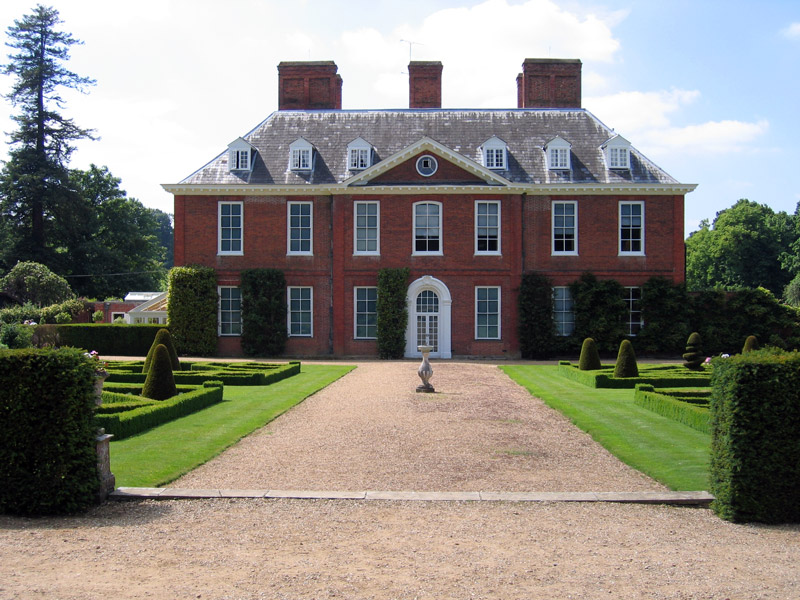
HARTFIELD ESTATE - Residence of the Woodhouse Family.
The Woodhouse Family is, aside from the Knightley Family, the most socially elite family in Highbury. Based on Emma's dowry, the annual income of the Woodhouse Family is about 20,000 pounds (about 2 million in today's money). The Woodhouse family home, Hartfield, is considered the heart of Highbury and attracts all the worthy company in the neighbourhood - Mr Knightley walks there almost every day. The characters in Emma from the Woodhouse family are Mr Woodhouse, Emma Woodhouse and Isabella Knightley.

Miss EMMA WOODHOUSE
Emma Woodhouse is the heroine of the story, and is Jane Austen's wealthiest and most socially elite heroine, being the heiress to 30,000 pounds (about 3 million) (in comparison, Lizzy Bennet's dowry is only 1000 pounds, or 10,000 pounds in today's money). Emma is twenty-one and kind-hearted, pretty and intelligent, but also spoiled, meddlesome and haughty, spending much of her time meddling in the love lives of the people of Hertfield.
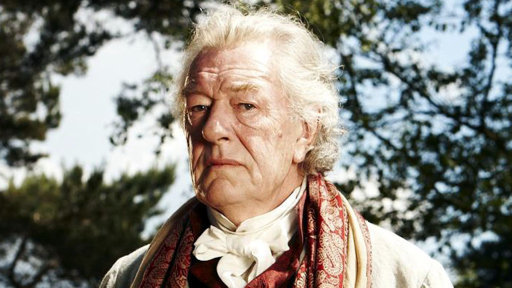
Mr WOODHOUSE, Esq.
Mr Woodhouse is a wealthy widower and father to Isabella and Emma Woodhouse. A pessimistic, old-fashioned hypochondriac, Mr Woodhouse is an affectionate, if overbearing father with little patriarchal authority who delights in spoiling his children and grandchildren. He is also 'gently selfish', unable to see things from another point of view.
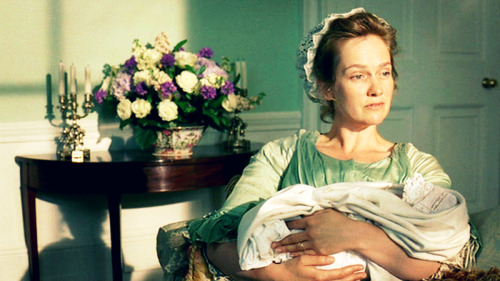
Mrs ISABELLA KNIGHTLEY (Miss ISABELLA WOODHOUSE)
Isabella Woodhouse is Emma's elder sister and at twenty-eight is seven years her senior; married to John Knightley and mother to five children: Henry, Little John, Bella, Little Emma and Little George. She is motherly and domestic, and not Emma's intellectual equal.

DONWELL ABBEY - Residence of the Knightley Family
The Knightley Family is the most socially elite family in Highbury, based in the family residence of Donwell Abbey, which is only a mile off from Hartfield. When the book begins only George Knightley, as the eldest son, lives at Donwell - his younger brother and family, as is custom, move to town to on their own estate. The characters in Emma from the Knightley family are Mr Knightley, John Knightley, Isabella Knightley, and John and Isabella's children Henry, Little John, Bella, Little Emma and Little George.

Mr GEORGE KNIGHTLEY, Esq.
Mr Knightley is the wealthiest gentleman in Highbury, being the master of the richest estate in Highbury. A close friend of the Woodhouse family, he is the brother-in-law of the Woodhouse sisters through is younger brother's marriage to Emma's sister. About thirty-seven at the beginning of the novel, Mr Knightley is wise, compassionate, intelligent, gentle and paternalistic, and serves as a father figure to Emma, his oldest friend, whom he deems silly and immature.

Mr JOHN KNIGHTLEY, Esq.
John Knightley is Mr Knightley's younger brother, and lives in a London estate with his family in the absence of an inherited property. He is an indulgent family man who gives in to his family's desires for holidays, outings, visitors, and visits to Highbury at the expense of his desire for a quiet family life. Like Emma, he has a shrewd eye for matchmaking, but does not often interfere.

RANDALLS ESTATE - Residence of the Weston Family
Randalls Estate is the neighbouring property of Hartfield, being the new residence of the recently wealthy Mr Weston.

MR WESTON, Esq.
A sanguine, placid, optimistic man, Mr Weston is a widower and father of Frank Churchill. Married beyond his means to a spoiled, wealthy young woman who ruined both herself and her husband before her death, Mr Weston is nonetheless a well-liked and respected man in Highbury, especially after his unexpected marriage to Emma's former governess Anne Taylor.

Mrs ANNE WESTON (Miss ANNE TAYLOR)
Anne Taylor is the former governess of Isabella and Emma Woodhouse, appointed after the death of their mother. To the distress of Mr and Emma Woodhouse, Miss Taylor marries Mr Weston and moves half a mile away to Randalls Estate.

Mr FRANK WESTON CHURCHILL
Flamboyant, fashionable and fiery, Frank Churchill is the son of Mr Weston and the nephew of his aunt and guardian, Mrs Churchill. Confined by his sickly but controlling aunt, he has grown into a good-natured but impatient, reckless, impulsive and accidentally selfish man.

Mrs CHURCHILL
The estranged sister of Mr Weston's first wife, Mrs Churchill adopts Frank Weston and keeps him away from his father and from Highbury, whom she sees as below the prosperous Churchill family.
THE VICARAGE - Parsonage of the Elton Family
Most country towns like Highbuy had a single church, with a modest house provided for the vicar called a parsonage. A vicar or clergyman was a good catch for a modest girl, but most aimed to improve their fortunes through marrying higher, using their religious education as social leverage. The residents at the vicarage are Mr Elton and his wife, Augusta.

Mr PHILIP ELTON
An ambitious, charming and charismatic young vicar; an eager social climber with sights on a beautiful bride with a large dowry; i.e. Emma.

Mrs AUGUSTA ELTON (Miss AUGUSTA HAWKINS)
A moneyed young woman from Bath, Mrs Elton is pretensious, irritating, flamboyant, condescending and patronizing; an equal match for her husband. She treats the country folk with disdain, even though she is amongst her social superiors with members of the landed gentry. Her treatment of her social inferiors Harriet Smith and Jane Fairfax inspires the people of Hartfield to be more sympathetic towards them.
THE BATES FAMILY
The Bates Family was formerly a member of the gentry before they fell on hard times and plunged, without a solid income or a patriarch, into relative poverty. The characters in the book belonging to the Bates family are Mrs Bates, Miss Bates and Jane Fairfax.
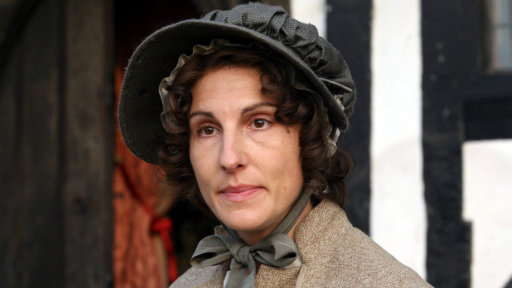
Miss BATES
A talktative, dimwitted but kind-natured spinster, the eldest daughter of Mrs Bates and the aunt of Jane Fairfax.

Mrs BATES
The mother of Miss Bates and the grandmother of Jane Fairfax; she does not talk. Ever. As in, never.

MISS JANE FAIRFAX (Mrs JANE WESTON CHURCHILL)
The orphaned niece of Miss Bates and only granddaughter of Mrs Bates, Jane Fairfax was sent away to become a ward of a wealthy family friend. Unlike Emma, she has no fortune of her own and so must become a governess, even though, as a gentleman's daughter, it is below her station. Shy, reserved and passive, Emma is jealous of Jane because of her accomplishments and the sympathy she attracts due to her poverty.
OTHERS:

Miss HARRIET SMITH (Mrs HARRIET MARTIN)
The 'natural' (illegitimate) daughter of someone-or-other, Harriet i had been brought up at Mrs Goddard's school in Highbury as a parlour boarder - a wealthy student who is elevated above the rest and given special priviledges. Despite her illegitimacy she has been comfortably brought up, with her anonymous family providing her generously, but she has no dowry and must stay at the school or leave and earn her keep as a governess. She is pretty and good natured, but unsophisticated and not intellectual. After the departure of Anne Taylor she becomes Emma's protege and companion; Emma is convinced that she deserves to be a gentleman's wife, and goes about making sure that happens.

Mr ROBERT MARTIN
A gentleman-farmer who is considered by Emma to be her, and therefore Harriet's social inferior. He is intelligent, sensible, practical, warm and generous, but Emma is convinced that he lacks class despite evidence otherwise. He lives with his sisters and is in love with Harriet Smith.
SYNOPSIS:
After the death of their mother, Isabella and Emma Woodhouse grow up in the comforts of Highbury with their affectionate father and doting governess, Anne Taylor. Other children in Highbury are not so lucky; after the death of his mother, Frank Weston is adopted by his aunt Mrs Churchill and removed from his father and from Highbury. After the death of both her parents, Jane Fairfax's well-meaning aunt sends her to be the ward of a wealthy family friend, and she grows up away from her family and from Highbury as the companion and chaperone of a wealthy girl, knowing that she will eventually have to leave their hospitality and make her own way in the world.
After her sister Isabella's marriage to family friend John Knightley, twenty-one year old Emma Woodhouse finds herself mistress of her father's house, her hypochondriac father's chief carer and enjoys the luxury of country gentry living and the assurance of independent wealth. Because of this, Emma is uninterested in marriage, instead preferring to play matchmaker to the residents of Highbury.
After the marriage of her governess Anne Taylor to their recently-wealthy neighbour Mr Weston (for which Emma takes credit for arranging), she takes on the pretty, unsophisticated parlour boarder Harriet Smith as her companion and protege. Despite Harriet's lack of fortune and family, illegitimacy and unsophisticated manner, Emma's class prejudice makes it inconceivable to her that any friend of hers deserves anything less than to be a gentleman's wife.
Emma attempts to match Mr Elton, the dashingly handsome vicar with Harriet, and convinces her to reject a marriage proposal from gentleman-farmer Robert Martin. Mr Knightley, Emma's brother-in-law and father/brother figure, chastises her for being narrow minded about Robert Martin's situation and unrealistic in her matchmaking for Harriet Smith, pointing out that Mr Elton is thoroughly aware of his good looks and social standing and would wish to seek a rich bride. Emma ignores this, and continues to encourage what she sees as a growing attachment between Mr Elton and Harriet, and Harriet becomes infatuated with Mr Elton and his charms.
Soon, however, Emma realizes the truth of Mr Knightley's words when Mr Elton instead professes his love to Emma and attempts to propose, despite her protests that Harriet is a much more suitable candidate. Thus Emma's attempt at matchmaking ends up with all three parties hurt; Mr Elton is offended at the idea of Harriet being considered his equal, and leaves Highbury only to return with the wealthy Augusta Hawkins from Bath in tow as his bride; Emma is humiliated at her misunderstanding and furious that Mr Elton's attraction was purely based on her wealth and social standing; Harriet is heartbroken at being rejected in favour of her friend and then abandoned completely by Mr Elton.
Whilst attempting to comfort Harriet, Highbury encounters two newcomers: Mr Frank Churchill, Mr Weston's son, and Jane Fairfax, Miss Bates' niece. Emma is attracted to the fashionable and flamboyant Frank Churchill and spends much time with him, at the expense of her friendship with Mr Knightley, who is accustomed to walking to Hartfield every day to spend time with Emma, who is sixteen years his junior. Mr Knightley is suspicious of Frank's apparently unusual behaviour - such as travelling all the way to London for a haircut - and it is implied that he is jealous of Frank and his relationship with Emma. Emma receives Jane Fairfax with less enthusiasm; despite her lack of funds Jane is beautiful and accomplished, and Emma is both irritated by her cool reserve and jealous of her accomplishments.
Mr Knightley, compassionate by nature, is sympathetic and caring towards Jane Fairfax, and Mrs Weston suspects that it is due to a romantic attachment; Mr Knightley being relatively old and unmarried, is wealthy enough not to require a rich bride but socially elite enough to desire a well-bred wife. Mrs Weston and others also assume that Frank and Emma are becoming romantically attach; Emma resists both assumptions, as she cannot imagine Mr Knightley taking a wife and imagines Frank to be a potential suitor for Harriet.
Mrs Elton turns out to be the most disagreeable woman imaginable, looking down on country folk and country living, even though Emma and Mr Knightley are arguably her social and financial superiors. Because of her condescending attitude towards Jane Emma begins to treat her with more kindness and respect; at a ball Mr Knightley offers to dance with Harriet after she is humiliated by Mrs Elton and snubbed by Mr Elton. The next day Frank saves Harriet from gypsy beggars and brings her to Emma; Harriet tells Emma that she has fallen in love with a man who saved her and is above her station, and Emma assumes she means Frank.
Knightley begins to suspect that Frank and Jane may have a secret understanding and warns Emma not to become too attached to Frank; Emma ignores him and, on an outing to Box Hill she flirts with Frank and insults Miss Bates, who is kind-hearted but dimwitted and incessantly talkative. Mr Knightley reprimands Emma and she weeps, and attempts to make up for her insult.
After news comes that Frank's aunt Mrs Churchill had died, it is revealed that he and Jane Fairfax have been secretly engaged since before their arrival at Highbury; Frank's attentions to Emma have just been to conceal the engagement, which would not have been approved of by his aunt. Emma is furious that she has, once again, been used; but realizes that she was never truly in love with Frank, and so no real harm has been done. Emma expects Harriet to also be heartbroken at the engagement, but Harriet instead says that she was referring to Mr Knightley, not Frank, and now believes that Mr Knightley returns the favour. Emma then finally realizes that she is in love with Mr Knightley, and has been all along, but due to her own meddling she has lost her opportunity to be with him.
Emma expects Mr Knightley to admit his affection for Harriet, but instead declares his love for Emma, and his disgust at Frank's behaviour. Frank and Jane earn the forgiveness of the Westons and the Woodhouses and marry; Emma and Mr Knightley get engaged, and Robert Martin proposes a second time to Harriet, who accepts. The novel ends with the marriage of Harriet and Robert Martin and Emma and George Knightley.
And there you have it.
THINGS TO NOTICE IF IT GETS REALLY BORING:
1. The relationship between Emma and Knightley

This is perhaps the most interesting element of the book - the curious, kind of paedophilic mildly incestuous relationship between Emma and Knightley. I don't really see it that way, but there are Knightley haters that do.
Mr Woodhouse is not the archetypal patriachal backbone of his family, being elderly, frail and an obsessive hypochondriac; Mr Knightley is therefore introduced as both a father substitute and an elder sibling substitute, especially with the marriage and departure of Emma's sister Isabella. Mr Knightley is introduced as being wealthy, sensible, fatherly and, well, old - sixteen years older than Emma. This age gap is further widened by the fact that his younger brother is married to her elder sister. He also takes on the role of a parent, chastising and disciplining Emma when necessary. In the end, though, Knightley is the only one of Emma's love interests who truly cared for her; Mr Elton was only interested in her money and Mr Churchill only used her to cover up his secret betrothal. However, Knightley makes no secret of his attraction to Emma, claiming that he 'loves to look at her' and 'has been in love with her since she was thirteen years old' - this is slightly creepy in an Austen book. What do you think? Should Emma really marry her daddy substitute?
More to come...I'm gonna go hit the sack.
One thing that puts Emma off modern audiences is that it's character driven, not plot driven. This is true for most of Austen's novels, because of the genre in which she write (comedy of manners) - this has established her reputation as a sharp critique of human personality and social interaction. However, Emma is by far the most character-driven Austen novel, made even more difficult to swallow because a) it happens in a world so far removed from our own b) most of the exciting stuff appears to have happened before the book (deaths, weddings, adoptions etc.) and c) nothing much actually happens in Emma; it's a personal discovery, not a physical journey.
Often people run into trouble when studying novels because they approach it in the wrong manner. When studying a novel, it is important to read it differently than if you were reading it for pleasure. Before studying it always pays to read the book cover to cover, or if this is too difficult to swallow read a synopsis (Wikipedia is always good for plain, sensible language) and watch an adaptation before attempting to read - this gets the storyline in your head and puts faces to characters. Newer adaptations are always easier on the modern eye, but the trade off is that they are often heavily compressed and romanticized - older adaptations from the traditional documentary era are normally meticulously faithful to the text, but are often long winded, badly acted, slow-paced, endlessly boring and old fashioned. For Emma, I've found that the 2009 BBC adaptation is excellent as it is set at a brisk pace, but is extremely faithful to the novel and the characterization is excellent. Remember, when you study a novel you are studying the text, not the plot - and this is why Emma is considered such a good study novel, because the language and characters are so much more important than the plot. So don't be afraid to read spoilers, or flip to the back of the book so that you know that it finally ends sooner or later.
I'm adding pictures from the recent 2009 adaptation because I think it's important to have a vivid image of what things look like inside your head - and what they exactly look like is neither imperative to the novel or the study of it.
SETTING: Emma is set in the country - where most of the gentry resided when not 'at business' in 'town' (London) - near a fictional town called Highbury, which is in Surrey (which is real). Most of the characters are of gentry class, or former members of the gentry.
CHARACTERS:
HARTFIELD ESTATE - Residence of the Woodhouse Family.
The Woodhouse Family is, aside from the Knightley Family, the most socially elite family in Highbury. Based on Emma's dowry, the annual income of the Woodhouse Family is about 20,000 pounds (about 2 million in today's money). The Woodhouse family home, Hartfield, is considered the heart of Highbury and attracts all the worthy company in the neighbourhood - Mr Knightley walks there almost every day. The characters in Emma from the Woodhouse family are Mr Woodhouse, Emma Woodhouse and Isabella Knightley.
Miss EMMA WOODHOUSE
Emma Woodhouse is the heroine of the story, and is Jane Austen's wealthiest and most socially elite heroine, being the heiress to 30,000 pounds (about 3 million) (in comparison, Lizzy Bennet's dowry is only 1000 pounds, or 10,000 pounds in today's money). Emma is twenty-one and kind-hearted, pretty and intelligent, but also spoiled, meddlesome and haughty, spending much of her time meddling in the love lives of the people of Hertfield.
Mr WOODHOUSE, Esq.
Mr Woodhouse is a wealthy widower and father to Isabella and Emma Woodhouse. A pessimistic, old-fashioned hypochondriac, Mr Woodhouse is an affectionate, if overbearing father with little patriarchal authority who delights in spoiling his children and grandchildren. He is also 'gently selfish', unable to see things from another point of view.
Mrs ISABELLA KNIGHTLEY (Miss ISABELLA WOODHOUSE)
Isabella Woodhouse is Emma's elder sister and at twenty-eight is seven years her senior; married to John Knightley and mother to five children: Henry, Little John, Bella, Little Emma and Little George. She is motherly and domestic, and not Emma's intellectual equal.
DONWELL ABBEY - Residence of the Knightley Family
The Knightley Family is the most socially elite family in Highbury, based in the family residence of Donwell Abbey, which is only a mile off from Hartfield. When the book begins only George Knightley, as the eldest son, lives at Donwell - his younger brother and family, as is custom, move to town to on their own estate. The characters in Emma from the Knightley family are Mr Knightley, John Knightley, Isabella Knightley, and John and Isabella's children Henry, Little John, Bella, Little Emma and Little George.

Mr GEORGE KNIGHTLEY, Esq.
Mr Knightley is the wealthiest gentleman in Highbury, being the master of the richest estate in Highbury. A close friend of the Woodhouse family, he is the brother-in-law of the Woodhouse sisters through is younger brother's marriage to Emma's sister. About thirty-seven at the beginning of the novel, Mr Knightley is wise, compassionate, intelligent, gentle and paternalistic, and serves as a father figure to Emma, his oldest friend, whom he deems silly and immature.
Mr JOHN KNIGHTLEY, Esq.
John Knightley is Mr Knightley's younger brother, and lives in a London estate with his family in the absence of an inherited property. He is an indulgent family man who gives in to his family's desires for holidays, outings, visitors, and visits to Highbury at the expense of his desire for a quiet family life. Like Emma, he has a shrewd eye for matchmaking, but does not often interfere.
RANDALLS ESTATE - Residence of the Weston Family
Randalls Estate is the neighbouring property of Hartfield, being the new residence of the recently wealthy Mr Weston.
MR WESTON, Esq.
A sanguine, placid, optimistic man, Mr Weston is a widower and father of Frank Churchill. Married beyond his means to a spoiled, wealthy young woman who ruined both herself and her husband before her death, Mr Weston is nonetheless a well-liked and respected man in Highbury, especially after his unexpected marriage to Emma's former governess Anne Taylor.
Mrs ANNE WESTON (Miss ANNE TAYLOR)
Anne Taylor is the former governess of Isabella and Emma Woodhouse, appointed after the death of their mother. To the distress of Mr and Emma Woodhouse, Miss Taylor marries Mr Weston and moves half a mile away to Randalls Estate.
Mr FRANK WESTON CHURCHILL
Flamboyant, fashionable and fiery, Frank Churchill is the son of Mr Weston and the nephew of his aunt and guardian, Mrs Churchill. Confined by his sickly but controlling aunt, he has grown into a good-natured but impatient, reckless, impulsive and accidentally selfish man.
Mrs CHURCHILL
The estranged sister of Mr Weston's first wife, Mrs Churchill adopts Frank Weston and keeps him away from his father and from Highbury, whom she sees as below the prosperous Churchill family.
THE VICARAGE - Parsonage of the Elton Family
Most country towns like Highbuy had a single church, with a modest house provided for the vicar called a parsonage. A vicar or clergyman was a good catch for a modest girl, but most aimed to improve their fortunes through marrying higher, using their religious education as social leverage. The residents at the vicarage are Mr Elton and his wife, Augusta.
Mr PHILIP ELTON
An ambitious, charming and charismatic young vicar; an eager social climber with sights on a beautiful bride with a large dowry; i.e. Emma.
Mrs AUGUSTA ELTON (Miss AUGUSTA HAWKINS)
A moneyed young woman from Bath, Mrs Elton is pretensious, irritating, flamboyant, condescending and patronizing; an equal match for her husband. She treats the country folk with disdain, even though she is amongst her social superiors with members of the landed gentry. Her treatment of her social inferiors Harriet Smith and Jane Fairfax inspires the people of Hartfield to be more sympathetic towards them.
THE BATES FAMILY
The Bates Family was formerly a member of the gentry before they fell on hard times and plunged, without a solid income or a patriarch, into relative poverty. The characters in the book belonging to the Bates family are Mrs Bates, Miss Bates and Jane Fairfax.
Miss BATES
A talktative, dimwitted but kind-natured spinster, the eldest daughter of Mrs Bates and the aunt of Jane Fairfax.
Mrs BATES
The mother of Miss Bates and the grandmother of Jane Fairfax; she does not talk. Ever. As in, never.
MISS JANE FAIRFAX (Mrs JANE WESTON CHURCHILL)
The orphaned niece of Miss Bates and only granddaughter of Mrs Bates, Jane Fairfax was sent away to become a ward of a wealthy family friend. Unlike Emma, she has no fortune of her own and so must become a governess, even though, as a gentleman's daughter, it is below her station. Shy, reserved and passive, Emma is jealous of Jane because of her accomplishments and the sympathy she attracts due to her poverty.
OTHERS:
Miss HARRIET SMITH (Mrs HARRIET MARTIN)
The 'natural' (illegitimate) daughter of someone-or-other, Harriet i had been brought up at Mrs Goddard's school in Highbury as a parlour boarder - a wealthy student who is elevated above the rest and given special priviledges. Despite her illegitimacy she has been comfortably brought up, with her anonymous family providing her generously, but she has no dowry and must stay at the school or leave and earn her keep as a governess. She is pretty and good natured, but unsophisticated and not intellectual. After the departure of Anne Taylor she becomes Emma's protege and companion; Emma is convinced that she deserves to be a gentleman's wife, and goes about making sure that happens.
Mr ROBERT MARTIN
A gentleman-farmer who is considered by Emma to be her, and therefore Harriet's social inferior. He is intelligent, sensible, practical, warm and generous, but Emma is convinced that he lacks class despite evidence otherwise. He lives with his sisters and is in love with Harriet Smith.
SYNOPSIS:
After the death of their mother, Isabella and Emma Woodhouse grow up in the comforts of Highbury with their affectionate father and doting governess, Anne Taylor. Other children in Highbury are not so lucky; after the death of his mother, Frank Weston is adopted by his aunt Mrs Churchill and removed from his father and from Highbury. After the death of both her parents, Jane Fairfax's well-meaning aunt sends her to be the ward of a wealthy family friend, and she grows up away from her family and from Highbury as the companion and chaperone of a wealthy girl, knowing that she will eventually have to leave their hospitality and make her own way in the world.
After her sister Isabella's marriage to family friend John Knightley, twenty-one year old Emma Woodhouse finds herself mistress of her father's house, her hypochondriac father's chief carer and enjoys the luxury of country gentry living and the assurance of independent wealth. Because of this, Emma is uninterested in marriage, instead preferring to play matchmaker to the residents of Highbury.
After the marriage of her governess Anne Taylor to their recently-wealthy neighbour Mr Weston (for which Emma takes credit for arranging), she takes on the pretty, unsophisticated parlour boarder Harriet Smith as her companion and protege. Despite Harriet's lack of fortune and family, illegitimacy and unsophisticated manner, Emma's class prejudice makes it inconceivable to her that any friend of hers deserves anything less than to be a gentleman's wife.
Emma attempts to match Mr Elton, the dashingly handsome vicar with Harriet, and convinces her to reject a marriage proposal from gentleman-farmer Robert Martin. Mr Knightley, Emma's brother-in-law and father/brother figure, chastises her for being narrow minded about Robert Martin's situation and unrealistic in her matchmaking for Harriet Smith, pointing out that Mr Elton is thoroughly aware of his good looks and social standing and would wish to seek a rich bride. Emma ignores this, and continues to encourage what she sees as a growing attachment between Mr Elton and Harriet, and Harriet becomes infatuated with Mr Elton and his charms.
Soon, however, Emma realizes the truth of Mr Knightley's words when Mr Elton instead professes his love to Emma and attempts to propose, despite her protests that Harriet is a much more suitable candidate. Thus Emma's attempt at matchmaking ends up with all three parties hurt; Mr Elton is offended at the idea of Harriet being considered his equal, and leaves Highbury only to return with the wealthy Augusta Hawkins from Bath in tow as his bride; Emma is humiliated at her misunderstanding and furious that Mr Elton's attraction was purely based on her wealth and social standing; Harriet is heartbroken at being rejected in favour of her friend and then abandoned completely by Mr Elton.
Whilst attempting to comfort Harriet, Highbury encounters two newcomers: Mr Frank Churchill, Mr Weston's son, and Jane Fairfax, Miss Bates' niece. Emma is attracted to the fashionable and flamboyant Frank Churchill and spends much time with him, at the expense of her friendship with Mr Knightley, who is accustomed to walking to Hartfield every day to spend time with Emma, who is sixteen years his junior. Mr Knightley is suspicious of Frank's apparently unusual behaviour - such as travelling all the way to London for a haircut - and it is implied that he is jealous of Frank and his relationship with Emma. Emma receives Jane Fairfax with less enthusiasm; despite her lack of funds Jane is beautiful and accomplished, and Emma is both irritated by her cool reserve and jealous of her accomplishments.
Mr Knightley, compassionate by nature, is sympathetic and caring towards Jane Fairfax, and Mrs Weston suspects that it is due to a romantic attachment; Mr Knightley being relatively old and unmarried, is wealthy enough not to require a rich bride but socially elite enough to desire a well-bred wife. Mrs Weston and others also assume that Frank and Emma are becoming romantically attach; Emma resists both assumptions, as she cannot imagine Mr Knightley taking a wife and imagines Frank to be a potential suitor for Harriet.
Mrs Elton turns out to be the most disagreeable woman imaginable, looking down on country folk and country living, even though Emma and Mr Knightley are arguably her social and financial superiors. Because of her condescending attitude towards Jane Emma begins to treat her with more kindness and respect; at a ball Mr Knightley offers to dance with Harriet after she is humiliated by Mrs Elton and snubbed by Mr Elton. The next day Frank saves Harriet from gypsy beggars and brings her to Emma; Harriet tells Emma that she has fallen in love with a man who saved her and is above her station, and Emma assumes she means Frank.
Knightley begins to suspect that Frank and Jane may have a secret understanding and warns Emma not to become too attached to Frank; Emma ignores him and, on an outing to Box Hill she flirts with Frank and insults Miss Bates, who is kind-hearted but dimwitted and incessantly talkative. Mr Knightley reprimands Emma and she weeps, and attempts to make up for her insult.
After news comes that Frank's aunt Mrs Churchill had died, it is revealed that he and Jane Fairfax have been secretly engaged since before their arrival at Highbury; Frank's attentions to Emma have just been to conceal the engagement, which would not have been approved of by his aunt. Emma is furious that she has, once again, been used; but realizes that she was never truly in love with Frank, and so no real harm has been done. Emma expects Harriet to also be heartbroken at the engagement, but Harriet instead says that she was referring to Mr Knightley, not Frank, and now believes that Mr Knightley returns the favour. Emma then finally realizes that she is in love with Mr Knightley, and has been all along, but due to her own meddling she has lost her opportunity to be with him.
Emma expects Mr Knightley to admit his affection for Harriet, but instead declares his love for Emma, and his disgust at Frank's behaviour. Frank and Jane earn the forgiveness of the Westons and the Woodhouses and marry; Emma and Mr Knightley get engaged, and Robert Martin proposes a second time to Harriet, who accepts. The novel ends with the marriage of Harriet and Robert Martin and Emma and George Knightley.
And there you have it.
THINGS TO NOTICE IF IT GETS REALLY BORING:
1. The relationship between Emma and Knightley
This is perhaps the most interesting element of the book - the curious, kind of paedophilic mildly incestuous relationship between Emma and Knightley. I don't really see it that way, but there are Knightley haters that do.
Mr Woodhouse is not the archetypal patriachal backbone of his family, being elderly, frail and an obsessive hypochondriac; Mr Knightley is therefore introduced as both a father substitute and an elder sibling substitute, especially with the marriage and departure of Emma's sister Isabella. Mr Knightley is introduced as being wealthy, sensible, fatherly and, well, old - sixteen years older than Emma. This age gap is further widened by the fact that his younger brother is married to her elder sister. He also takes on the role of a parent, chastising and disciplining Emma when necessary. In the end, though, Knightley is the only one of Emma's love interests who truly cared for her; Mr Elton was only interested in her money and Mr Churchill only used her to cover up his secret betrothal. However, Knightley makes no secret of his attraction to Emma, claiming that he 'loves to look at her' and 'has been in love with her since she was thirteen years old' - this is slightly creepy in an Austen book. What do you think? Should Emma really marry her daddy substitute?
More to come...I'm gonna go hit the sack.
Thursday, July 21, 2011
Rome: Naming Conventions
Okay, I was writing something about Roman naming conventions - I'll get back to that.
But firstly
How cute is Hayden from Masterchef?
But firstly
How cute is Hayden from Masterchef?
Wednesday, July 20, 2011
Rome: Borders
The borders of the Roman Republic is hard to gauge as Rome had differing levels of power over different parts of what is now considered the Mediterraenean (can never spell it) and Europe - for example, Egypt maintained its monarchy but was obliged to supply vital grain to Rome in exchange for military support, and was thus considered a 'vassal' of Rome, and this continued until the death of Cleopatra which coincided nicely with the rise of the Roman Empire. By my reckoning Rome controlled, either as 'client states', provinces or vassal states, the entire Mediterreanean by the eve of the assassination of Julius Caesar - this included Spain (Espania), the Italian penninsula, Northern Africa (Numidia), Egypt, Turkey (Asia), and Gaul, which is essentially France and Belgium. There is other stuff, but I'm lazy. It is said that Rome controlled one-quarter of the known population - the rest were tribal or Chinese :)
Rome was a city state so was not considered a 'capital' as it is today, but as a state within itself. Only those born in Rome and descended from Romans were considered true Romans, and they were fiercely proud of this fact, although other places in Roman control, especially the Italian penninsula, were given full or partial citizenship.
Rome was a city state so was not considered a 'capital' as it is today, but as a state within itself. Only those born in Rome and descended from Romans were considered true Romans, and they were fiercely proud of this fact, although other places in Roman control, especially the Italian penninsula, were given full or partial citizenship.
Rome: The Late Republic.
The History of Rome is divided into basic eras:
A popular era of study is referred to by Scullard as 'From the Gracchi to Nero'. This refers to the time of the Brothers Gracchi (2nd century BC) to the Emperor Nero (1st century AD), and so is the late Roman Republic to the end of the Julio-Claudian dynasty of the Roman Republic. So far I have studied up to the First Triumvirate, but my particular area of interest is from the First Triumvirate to the fall of the Fall of the Roman Republic.
Please don't feel bad if you didn't understand any of the above.
I don't really want to zero in on particular events or dates because, to be honest, I'm neither an expert at those nor am I particularly interested. However, as a rough guide, my writing should apply to the period from the Brothers Gracchi to the fall of the Roman Republic - the period which I consider to be the Late Roman Republic.
- The Roman Kingdom (753 BC - 509 BC) and the Etruscan civilization (800 BC - 300 BC)
- The Roman Republic (509 BC - 27 BC)
- The Roman Empire (27 BC - AD 476) and the Western Roman Empire (285-476)
- The Byzantine Empire (395 - 1453)
A popular era of study is referred to by Scullard as 'From the Gracchi to Nero'. This refers to the time of the Brothers Gracchi (2nd century BC) to the Emperor Nero (1st century AD), and so is the late Roman Republic to the end of the Julio-Claudian dynasty of the Roman Republic. So far I have studied up to the First Triumvirate, but my particular area of interest is from the First Triumvirate to the fall of the Fall of the Roman Republic.
Please don't feel bad if you didn't understand any of the above.
I don't really want to zero in on particular events or dates because, to be honest, I'm neither an expert at those nor am I particularly interested. However, as a rough guide, my writing should apply to the period from the Brothers Gracchi to the fall of the Roman Republic - the period which I consider to be the Late Roman Republic.
Rome: My Study
I grew up not knowing much about Rome, not being very interested in Rome - my main passion, history wise, was, is and always will be the Tudor Dynasty of Renaissance England. But yeah, I knew who Caesar was.
I didn't study history formally at school until this year because a) my primary school sucked and all we did was Australian history, which is so short and so boring especially studied seven years straight at a primary school level and b) because I wanted to dabble in other social science subjects last year like politics and philosophy and the history classes were full anyway - if I had applied I probably would have ended up in economics or geography.
Last year I chose my six subjects for the next two years: Literature, English, Modern History, Ancient History, Politics & Law and Psychology - and history has been a huge part of all six subjects. Modern and Ancient History speaks for themselves, but you'll be surprised how much history pops up in the others. One thing I love about history is that it encapuslates everything - everything you study, or listen to, or read, every person you meet, has a history.
My study of Ancient History got off to a shaky start. One thing that got to me was that world was so long ago, and so different from ours - other problems included everybody had the same name (seriously) and the sources are not as clear as I was used to in my self-study of later eras.
My lifesaver was the TV series ROME, which as an R-rated epic saga of the late Roman republic I had affectionately nicknamed 'prehistoric porn'. But it really made me see into the world and mindsets of the Ancient Romans, who can blame Shakespeare and Hollywood for attempting to marry a savagely pre Judeo-Christian polytheistic society with the virtues of modern-day Christian capitalism. First Man In Rome was on my booklist because my teacher is a fan of Colleen McCullough, and although it took me a little while to hack into I enjoyed it very much, and I've now read Caesar's Women which I also liked a lot - I'm looking forward to getting my hands on the rest of the series.
I am currently (narrowly) at the top of my Ancient History class, and I believe that to study history successfully you need the help of all kinds of media, even media that is more on the high-budged fictionalized side of things (but let's face it, Plutarch is hardly unbiased or reliable either) and something which I still feel is lacking: sources written at your level - sources that are easy to understand.
I am by no means an expert in this field, but I am attempting to create a set of sources that cover the society and culture of the late Roman republic aimed at high school and upper-primary school students. Please don't use this for PhDs...although given the academic inflation recently, why not?
I didn't study history formally at school until this year because a) my primary school sucked and all we did was Australian history, which is so short and so boring especially studied seven years straight at a primary school level and b) because I wanted to dabble in other social science subjects last year like politics and philosophy and the history classes were full anyway - if I had applied I probably would have ended up in economics or geography.
Last year I chose my six subjects for the next two years: Literature, English, Modern History, Ancient History, Politics & Law and Psychology - and history has been a huge part of all six subjects. Modern and Ancient History speaks for themselves, but you'll be surprised how much history pops up in the others. One thing I love about history is that it encapuslates everything - everything you study, or listen to, or read, every person you meet, has a history.
My study of Ancient History got off to a shaky start. One thing that got to me was that world was so long ago, and so different from ours - other problems included everybody had the same name (seriously) and the sources are not as clear as I was used to in my self-study of later eras.
My lifesaver was the TV series ROME, which as an R-rated epic saga of the late Roman republic I had affectionately nicknamed 'prehistoric porn'. But it really made me see into the world and mindsets of the Ancient Romans, who can blame Shakespeare and Hollywood for attempting to marry a savagely pre Judeo-Christian polytheistic society with the virtues of modern-day Christian capitalism. First Man In Rome was on my booklist because my teacher is a fan of Colleen McCullough, and although it took me a little while to hack into I enjoyed it very much, and I've now read Caesar's Women which I also liked a lot - I'm looking forward to getting my hands on the rest of the series.
I am currently (narrowly) at the top of my Ancient History class, and I believe that to study history successfully you need the help of all kinds of media, even media that is more on the high-budged fictionalized side of things (but let's face it, Plutarch is hardly unbiased or reliable either) and something which I still feel is lacking: sources written at your level - sources that are easy to understand.
I am by no means an expert in this field, but I am attempting to create a set of sources that cover the society and culture of the late Roman republic aimed at high school and upper-primary school students. Please don't use this for PhDs...although given the academic inflation recently, why not?
Wednesday, April 20, 2011
I Know She's a Doll.
A critique on the article 'Academics Like to Play with Barbies, Too' by Julia Griffin.
P.S. I'm sorry if it's too academically boring - it was a school paper for English. Just to prove that I can write a more refined form of ranting than what is normally on this blog.
I Know She's a Doll.
Edited by Mr Q and L.S.
The Barbie doll is proof that we can say one thing and do another - after all the criticism of Barbie's 1 in 100,000 body that would supposedly suffer from chronic diarrhoea, they still fly off the shelves fifty years after the original dumb blonde was invented - two a second, no less. And because last time I checked three to seven year old girls don't have the resources to fork up ten dollars on a piece of plastic, it must be the adults who are buying this toy that has proven to have disturbing effects on the average girl's self esteem and eating habits. But apparently being an all-American Made in China icon trimps all, as Julia Griffin writes in her article 'Academics Like to Play With Barbies, Too'. In her article Julia Griffin attempts to remain neutral between the pros and cons of the world's bestselling toy, but her use of language either deliberately or accidentally dismisses all the disturbing statistics she brings up.
Julia Griffin's contradictory article begins with the title 'Academics Like to Play With Barbies, Too' - the use of the word 'academic' implies that the article is an observation of the Barbie phenomenon from a purely objective, factual view. However, it alsp presents the 'academics' as the neutral party, represented by the author, separating herself from the 'feminists and public campaigns' she describes as 'attacking' Barbie despite her popularity. She also says that West Virginia Democrat Jeff Eldridge's proposal to ban the sale of Barbie and 'other similarly unrealistic dolls' because they 'place an undue importance on physical beauty to the detriment of the intellectual and emptional development' is a 'threat'. By using negative language on Barbie critics she subtly establishes herself as being pro-Barbie despite her neutrality.
Grifin then goes on to analyse the body stats of Barbe that has the 'feminists and public campaigns' worried, but only after she states that 'Barbie has hardly been known for a physically attainable appearance', effectively marginalizing any criticism she's going to heap on the world's favourite piece of plastic. She also only focuses on Barbie's measurements prior to the 1997 makeover - in which Mattel modified the barbie mould so that she would 'better fit in to modern fashion' - and so referst to all the measurements in the past tense. This gives the idea that the disturbing statistics are a thing of the past, and that the neo-Barbie is not as extreme. This is further extended by the use of the word 'historic' before she claims that Barbie's waistline is, proportionally, 39 percent smaller than the average anorexic patient. After writing that Barbie's fat-to-body-weight ratio was 'way below the 17 percent required to menstruate', she then jokes 'perhaps this explains why she's never had kids', brushing away what would be a very serious problem had Barbie been a live person. By contrasting the ugly facts with dismissive and past tense language, Griffin puts forward the impression that she is worred about the Barbie statistics, but is instead dismissing them as a 'thing of the past' - much like we would dismiss a barbaric chapter of history as 'been there, done that'.
Griffin goes on to state that 'physical attributes aside, whether Barbie truly poses a detrimental threat to girls' physical and emptional development is still under debate'. She says that on one hand, Barbie is 'pretty and apparently anorexic', but on the other, 'she is alsp presented as a smart, loveable woman with limitless goals and opportunities'. Whilst this is an attempt to contrast a positive with a negative, they are connected and are all part of the Feminists Problem With The Barbies - Barbie doesn't present two separate messages of 'anorexia' and 'success', but connects them - telling girls that 'you have to be skinny to be successful'. This is further reinforced by Barbie's unrealistically successful life - becoming a teacher, surgeon, veterinarian, astronaut, U.S. Air Force Thunderbird pilot, Canadian Mountie and independent presidential candidate in the space of fifty years, a fact that is inadverdently highlighted in Griffin's flawed analysis of Barbie. By separating a negative Barbie issue into a pro and a con, the article gives the appearance of an even-handed judgement of the Barbie craze.
The article then quotes a psychologist finding that girls aged between 5 and 71/2 exposed to Barbie were more likely to have a lower body esteem and a greater desire for a thin body than girls exposed to the 'more realistic' Emme doll, but that the situation is reversed in girls older than 71/2, where negative self esteem issues were associated with the size-sixteen Emme doll instead of the size-two Barbie doll. This is justified as being an example of the desire to be thin internalized inside the mind of a child, and that realistic body figures only reinforce this desire to be thin, rather than reversing it. Griffin's use of quotation marks around the word 'realistic' when referring to the Emme doll casts the realism of the doll in doubt, and the findings of this improperly-referenced experiment are used to transfer the blame of poor self esteem from the Barbie doll to the phenomenon of 'internalizing the skinny desire'. The experiment is then dismissed entirely in the next paragraph, by quoting another, more recent psychology finding that could not directly blame Barbie for any body image issues, thus cancelling out the findings of the previous experiment, and stating that scientists have linked negative body image to the beauty ideals of the media as a whole. By quoting psychological experiments the article appears to be basing its argument on 'academics' and 'fact', but by interpreting and then dismissing the psychological findings and diffusing the blame to other factors of low self esteem it instead presents more information in favour of the harmlessness of the Barbie doll.
The author then presents two further experiments, this time blatantly in favour of Barbie-like dolls - that they reinforce gender roles and social values, and that the phenomenon of older girls destroying their Barbie dolls neutralizes the negative effects Barbie dolls may impose, as destroying Barbie dolls is seen as a sign of rejecting Barbie's perfection. by scientifically justifying the article's bias, the article remains a facade of neutrality despite all the evidence against Barbie being neutralized and all evidence in favour of Barbie being highlighted.
The article never explicicitly states specific arguments against the Barbie trend, or presents subject-specific arguments against the 'feminists' that are 'attacking Barbie'. Instead, all criticism is negated by the author's argument that Barbie 'remains a cultural icon of America and the world, beloved by girls and collectors alike', by appealing to the power of the masses - if they all do it, it must be good. Julia Griffin's article 'Academics Like to Play With Barbies, Too' is an example of a poorly-disguised defence of something that is not being judged, but championed by not only Griffin, but the world over. Griffin's use of persuasive and misleading language subconsciously makes us think that hey, the Barbie isn't really so bad after all.
But the final nail in the coffin for the argument against the hypocrisy, unrealism and sinister negative impacts of Barbie is the line that the article finishes with:
'she's a doll, people...'
Copyright 2011 Lady Solitaire. No part of the above work may be reproduced without written permission from the author.
See! You've been conned all this time! Lol.
Click here for the original article.
BTW, I don't know the author wrote the article personally and this isn't a personal attack on her career or her writing. A student's gotta do what a student's gottta do...to get 99%.
P.S. I'm sorry if it's too academically boring - it was a school paper for English. Just to prove that I can write a more refined form of ranting than what is normally on this blog.
I Know She's a Doll.
Edited by Mr Q and L.S.
The Barbie doll is proof that we can say one thing and do another - after all the criticism of Barbie's 1 in 100,000 body that would supposedly suffer from chronic diarrhoea, they still fly off the shelves fifty years after the original dumb blonde was invented - two a second, no less. And because last time I checked three to seven year old girls don't have the resources to fork up ten dollars on a piece of plastic, it must be the adults who are buying this toy that has proven to have disturbing effects on the average girl's self esteem and eating habits. But apparently being an all-American Made in China icon trimps all, as Julia Griffin writes in her article 'Academics Like to Play With Barbies, Too'. In her article Julia Griffin attempts to remain neutral between the pros and cons of the world's bestselling toy, but her use of language either deliberately or accidentally dismisses all the disturbing statistics she brings up.
Julia Griffin's contradictory article begins with the title 'Academics Like to Play With Barbies, Too' - the use of the word 'academic' implies that the article is an observation of the Barbie phenomenon from a purely objective, factual view. However, it alsp presents the 'academics' as the neutral party, represented by the author, separating herself from the 'feminists and public campaigns' she describes as 'attacking' Barbie despite her popularity. She also says that West Virginia Democrat Jeff Eldridge's proposal to ban the sale of Barbie and 'other similarly unrealistic dolls' because they 'place an undue importance on physical beauty to the detriment of the intellectual and emptional development' is a 'threat'. By using negative language on Barbie critics she subtly establishes herself as being pro-Barbie despite her neutrality.
Grifin then goes on to analyse the body stats of Barbe that has the 'feminists and public campaigns' worried, but only after she states that 'Barbie has hardly been known for a physically attainable appearance', effectively marginalizing any criticism she's going to heap on the world's favourite piece of plastic. She also only focuses on Barbie's measurements prior to the 1997 makeover - in which Mattel modified the barbie mould so that she would 'better fit in to modern fashion' - and so referst to all the measurements in the past tense. This gives the idea that the disturbing statistics are a thing of the past, and that the neo-Barbie is not as extreme. This is further extended by the use of the word 'historic' before she claims that Barbie's waistline is, proportionally, 39 percent smaller than the average anorexic patient. After writing that Barbie's fat-to-body-weight ratio was 'way below the 17 percent required to menstruate', she then jokes 'perhaps this explains why she's never had kids', brushing away what would be a very serious problem had Barbie been a live person. By contrasting the ugly facts with dismissive and past tense language, Griffin puts forward the impression that she is worred about the Barbie statistics, but is instead dismissing them as a 'thing of the past' - much like we would dismiss a barbaric chapter of history as 'been there, done that'.
Griffin goes on to state that 'physical attributes aside, whether Barbie truly poses a detrimental threat to girls' physical and emptional development is still under debate'. She says that on one hand, Barbie is 'pretty and apparently anorexic', but on the other, 'she is alsp presented as a smart, loveable woman with limitless goals and opportunities'. Whilst this is an attempt to contrast a positive with a negative, they are connected and are all part of the Feminists Problem With The Barbies - Barbie doesn't present two separate messages of 'anorexia' and 'success', but connects them - telling girls that 'you have to be skinny to be successful'. This is further reinforced by Barbie's unrealistically successful life - becoming a teacher, surgeon, veterinarian, astronaut, U.S. Air Force Thunderbird pilot, Canadian Mountie and independent presidential candidate in the space of fifty years, a fact that is inadverdently highlighted in Griffin's flawed analysis of Barbie. By separating a negative Barbie issue into a pro and a con, the article gives the appearance of an even-handed judgement of the Barbie craze.
The article then quotes a psychologist finding that girls aged between 5 and 71/2 exposed to Barbie were more likely to have a lower body esteem and a greater desire for a thin body than girls exposed to the 'more realistic' Emme doll, but that the situation is reversed in girls older than 71/2, where negative self esteem issues were associated with the size-sixteen Emme doll instead of the size-two Barbie doll. This is justified as being an example of the desire to be thin internalized inside the mind of a child, and that realistic body figures only reinforce this desire to be thin, rather than reversing it. Griffin's use of quotation marks around the word 'realistic' when referring to the Emme doll casts the realism of the doll in doubt, and the findings of this improperly-referenced experiment are used to transfer the blame of poor self esteem from the Barbie doll to the phenomenon of 'internalizing the skinny desire'. The experiment is then dismissed entirely in the next paragraph, by quoting another, more recent psychology finding that could not directly blame Barbie for any body image issues, thus cancelling out the findings of the previous experiment, and stating that scientists have linked negative body image to the beauty ideals of the media as a whole. By quoting psychological experiments the article appears to be basing its argument on 'academics' and 'fact', but by interpreting and then dismissing the psychological findings and diffusing the blame to other factors of low self esteem it instead presents more information in favour of the harmlessness of the Barbie doll.
The author then presents two further experiments, this time blatantly in favour of Barbie-like dolls - that they reinforce gender roles and social values, and that the phenomenon of older girls destroying their Barbie dolls neutralizes the negative effects Barbie dolls may impose, as destroying Barbie dolls is seen as a sign of rejecting Barbie's perfection. by scientifically justifying the article's bias, the article remains a facade of neutrality despite all the evidence against Barbie being neutralized and all evidence in favour of Barbie being highlighted.
The article never explicicitly states specific arguments against the Barbie trend, or presents subject-specific arguments against the 'feminists' that are 'attacking Barbie'. Instead, all criticism is negated by the author's argument that Barbie 'remains a cultural icon of America and the world, beloved by girls and collectors alike', by appealing to the power of the masses - if they all do it, it must be good. Julia Griffin's article 'Academics Like to Play With Barbies, Too' is an example of a poorly-disguised defence of something that is not being judged, but championed by not only Griffin, but the world over. Griffin's use of persuasive and misleading language subconsciously makes us think that hey, the Barbie isn't really so bad after all.
But the final nail in the coffin for the argument against the hypocrisy, unrealism and sinister negative impacts of Barbie is the line that the article finishes with:
'she's a doll, people...'
Copyright 2011 Lady Solitaire. No part of the above work may be reproduced without written permission from the author.
See! You've been conned all this time! Lol.
Click here for the original article.
BTW, I don't know the author wrote the article personally and this isn't a personal attack on her career or her writing. A student's gotta do what a student's gottta do...to get 99%.
Friday, January 28, 2011
Pride and Prejudice: The Novel and The Movie.
Pride and Prejudice has maintained it's popularity due to it's uncanny relevance to modern day society, despite the manifold differences between the world today and back in 18th century England.
But even a book famed for it's universal appeal has a couple of WTF!? elements. This is a study guide of sorts, based on Pride and Prejudice, both the novel and the 2005 movie.
Synopsis (based mostly on the movie):
Elizabeth "Lizzy" Bennet lives with her family of middle-upper class gentry with some financial strain in Longbourn, near Meryton when a wealthy gentleman, his sister (in the book, two sisters and the husband of the eldest) and his closest friend rent Netherfield Park, the grandest house in the county. The gentleman in question is a Mr Charles Bingley, a very eligible bachelor of 5,000 pounds a year (That would be a lot. like 500,000 pounds in today's money.) and is immediately attracted to Lizzy's elder sister Jane Bennet, who is considered the beauty of the county. The sister (sisters and husband) are mildly aloof and condescending on the Bennets, however they take a liking to Jane, but Mr Bingley's friend, Mr Darcy, is blantantly rude and haughty towards the entire county, being an extremely wealthy man of double Bingley's income. Through his cold and condescending manner he manages injure Lizzy's pride through a casual jilt on her plainness ("not handsome enough to tempt me") and has seemingly earned forever her bad opinion of him, due to her habit of judging people based on first impressions. Mr Bingley falls blindly in love with Jane, but both Mr Darcy and Bingley's sisters are appalled at the lack of propriety shown by the rest of Jane and Lizzy's family: the relaxed and unsociable Mr Bennet, silly and narrow-minded Mrs Bennet, who's desperation to get her daughters married into good families drives her into actions that make her a social embarassment, Mary Bennet, the plain, dull, overachieving sister, and Catherine "Kitty" and Lydia Bennet, who are as silly and excitable as their mother. Mr Darcy is further concerned by Jane's apparent indifference to Mr Bingley, believing that a marriage between them would be as a result of unmatched levels of affection, and for the sole benefit of improving the Bennet's social standing. This is later revealed to be a misunderstanding of Jane's quiet and shy nature.
As the Bingley's and Jane grow close, Jane is invited to dine with the ladies of Netherfield Park, but through intervention by Mrs Bennet rides there on horseback in the rain, catches cold, and is forced to stay at Netherfield for several days. In order to tend to her, Lizzy hikes through mud to Netherfield, scandalising the prim and proper Bingley sisters. Caroline Bingley, the unmarried sister, grows jealous as Mr Darcy begins to pay Lizzy particular attention during her stay.
After Lizzy and Jane return to Longbourn they are visited by Mr Bennet's cousin who will inherit the Longbourn estate, due to the lack of male heir on Mr Bennet's part - which would leave Mr Bennet's widow and any unmarried daughters destitute and at the mercy of this said cousin upon Mr Bennet's death. Mr Collins, who is described as a silly, pompous and self-important man, intends to solve this dilemma by marrying one of Mr Bennet's daughters, thus creating peace between the families and obtaining a wife, which he believes is one of his very long list of things he must do as part of his role of clergyman. He is attracted to Jane, but after Mrs Bennet warns him (erronously) that she is soon to be engaged, he turns his attentions to Lizzy. Mr Collins soon proposes to Lizzy, but she cannot reconcile herself to the idea of marrying without love, let alone the idea of marrying someone she considers to be ridiculous and socially awkward, and rejects him. A wounded Mr Collins then leaves the Bennet's to stay with the Lucases, another family of minor gentry, and proposes to Lizzy's best friend, Charlotte Lucas. Lizzy is appalled when Charlotte accepts him, not out of love but for fear of becoming an old maid, the desire for her own home and financial security - plain, not wealthy and twenty-seven, Charlotte was considered far from an eligible for marriage and considered herself to have 'a lot to be thankful for'.
During Lizzy's awkward encounter with Mr Collins she meets Mr Wickham, a seemingly charming member of the militia stationed in Meryton for the winter. After witnessing a cold encounter between Mr Wickham and Mr Darcy, Mr Wickham recounts that he was a childhood friend of Mr Darcy, who's father bequeathed to him the rectory on their estate. He then goes on to claim that after old Mr Darcy died, the current Mr Darcy gave the living to another man, reducing Mr Wickham to the poor state he is in at the present. This fuels Lizzy's sympathy towards Mr Wickham, and also her hatred towards Mr Darcy.
Meanwhile, Mr Darcy and Bingley's sisters have convinced Mr Bingley to leave Netherfield and go to London, and Caroline Bingley writes a heartbroken Jane a letter telling her of their departure, and hinting that she intends her brother to be matched with Georgiana Darcy, Mr Darcy's sister, and Mr Darcy with herself. Lizzy, convinced that Mr Bingley was taken away against his better judgement, sends a disillusioned Jane to London to find him. Lizzy grows lonely in the absence of her best friend and the departure of her sister to London, and so visits Mr Collins and the new Mrs Collins at his parsonage near Rosings Park, where she is introduced to the condescending and haughty Lady Catherine de Burgh, Mr Collins' patroness and her daughter, the extremely wealthy but sickly heiress Anne de Burgh. Whilst at Rosings Park Lizzy meets Mr Darcy, who is revealed to be Lady Catherine's nephew. He is accompanied by his cousin, Colonel Fitzwilliam, who later slips that Mr Darcy deliberately separated his 'closest friend' (Mr Bingley) from an 'imprudent marriage', citing the 'lady's' (Jane) indifference and family.
During Lizzy's stay with the Collins' Mr Darcy visits her several times and attempts, unsuccessfully, to talk to her, with comically disasterous results. He later plucks up the courage to admit his love and admiration for her, and proposes, although her admits that he likes her against his better judgement, but he is willing to overlook ' her inferior birth and his rank'. Angry and insulted, Lizzy rejects him, citing his treatment of herself, her sister and of Mr Wickham, and claims that due to 'his arrogance and conceit and selfish distain of the feelings of others' makes him the last man that she could ever be 'prevailed upon' to marry. He leaves, humiliated and jilted, but returns bearing a letter.
In the letter Mr Darcy tells his side of Wickham's story: the old Mr Darcy had left Mr Wickham the rectory of the estate, with the intention of Mr Wickham entering the Church. Mr Wickham made it clear to Mr Darcy that he wasn't going to take orders and demanded instead the full monetary value of the living, which Mr Darcy gave him but was gambled away within weeks. Mr Darcy then refused a plea for more money, and then Mr Wickham cut off all ties with the Darcy family. He returned 'last summer' and declared a passionate love to 15 year old Georgiana Darcy, Mr Darcy's young, naive and highly eligible sister, and tried to persuade her to elope with him. After Mr Darcy stated his intentions of cutting Georgiana off from her generous dowry of 30,000 pounds upon her elopement, Mr Wickham vanished. Mr Darcy then defends his actions concerning Mr Bingley and Jane Bennet, saying that they were wrong, but 'in the service of a friend' and that he was driven by the Bennet's complete lack of propriety. Lizzy then rethinks her treatment and opinion of Mr Darcy, and also the behaviour of her family and how it affects them.
Lizzy returns to Longbourn to learn that Lydia has been invited as a companion to her aunt on a trip to Brighton. Lizzy tries to persuade her father into disallowing her scandalous younger sister to go, but Mr Bennet, convinced that Lydia's poverty will act as a deterrent against 'any real mischief', decides that exposing Lydia to society will teach her of her own lack of importance and inferiority. Lizzy than accepts an invitation from another aunt to be her companion on a tour of the Peak District. During their travels they tour Pemberley, Mr Darcy's estate, where Lizzy runs into a changed Mr Darcy, intent on showing Lizzy that he can be civil, caring and courteous. Lizzy also meets Georgiana Darcy, and finds her closer to her brother's description of her than that of Mr Wickham, thus prompting Lizzy to accept the credibility of Mr Darcy's letter.
Lizzy's tour is cut short when news reaches her that Mr Bennet has left for London because Lydia has run away with Mr Wickham, who is revealed to have no intentions of marrying her, and has disappeared without a trace, thus ruining the entire family. They depart immediately, but shortly after she returns Mr Bennet is sent a letter by their uncle, saying that he has found Lydia and Mr Wickham and that Wickham will agree to marry Lydia on the condition that Mr Bennet provides a dowry of 2000 pounds, which is equivalent to 100 pounds a year. Mr Bennet agrees and Lydia is married, but the family is puzzled as to why Wickham accepted Lydia on such a meagre dowry. Lydia then slips that Mr Darcy was at her wedding, which he funded along with Mr Wickham's monetary demands in exchange for marrying Lydia, which amounted to about an entire year of Mr Darcy's income.
After Lydia leaves it is revealed that Mr Bingley is returning to Netherfield, but his sisters will be staying in London. Soon after her returns he proposes to Jane, and Lizzy suspects that Mr Darcy may be behind Mr Bingley's return and proposal.
Soon after Jane's engagement Lady Catherine de Burgh arrives at Longbourn unexpectedly, anxious to clarify that rumours, inadvertently spread by Mr Collins, of Lizzy's engagement to Mr Darcy are false. After much verbal abuse on Lady Catherine's part Lizzy admits that she is not engaged to Mr Darcy, but refuses to promise that she will never enter into an engagement. When news of his aunt's vist reaches Mr Darcy he allows himself to hope that Lizzy will give him a second chance, and proposes again, which Lizzy accepts.
Characters:
Miss Elizabeth 'Lizzy' Bennet (later Mrs Elizabeth Darcy): The main female protagonist of the novel/movie, and the love interest of Mr Darcy. The second and favourite of Mr Bennet's daughters, Lizzy is described as being moderately beautiful, twenty years old, headstrong, stubborn and quick to judge.
Mr Fitzwilliam Darcy, Esq.: The main male protagonist of the novel/movie, and the love interest of Elizabeth Bennet. A man of large income and vast property, he is initially proud, cold and haughty but shows that he can be caring and compassionate towards those he cares about. He is described as being tall, handsome and twenty-eight years old.
Mr Bennet: The father of the five Bennet sisters, Mr Bennet seems quietly resigned to his fate as a financially strained gentleman with five unmarried daughters and no male heir. He is particularly close to Lizzy, but he has little patience with his wife or the rest of his daughters, although he does not attempt to change them, being merely content with teasing and gently joking about them.
Mrs Bennet (nee Gardiner): The mother of the five Bennet sisters, Mrs Bennet is a narrow-minded, silly and excitable woman who does not understand her husband, her daughters or her own ridiculousness. She is particularly close to Lydia, but is immensely proud of being the mother of Jane, who is considered the most beautiful lady in the county. Her business in life is to get her daughters married, to save both them and herself from poverty upon Mr Bennet's death.
Miss Jane Bennet (later Mrs Jane Bingley): The eldest of the Bennet sisters at twenty-two, and the love interest of Mr Bingley, Jane is the foil of Lizzy's character, being calm, quiet, tolerant, shy and reserved. After whethering out the family dramas of the novel, she accepts Mr Bingley's proposal. Lizzy is closest to Jane of all the sisters.
Miss Mary Bennet: The middle of the Bennet sisters at age eighteen or nineteen, she is considered the plainest of them all, and thus strives to distinguish herself through literary and musical accomplishments, but she is described as having 'neither genius nor taste'. In the movie it is hinted that she has a crush on, or at least admires, Mr Collins.
Miss Catherine 'Kitty' Bennet: The second youngest of the Bennet sisters at age seventeen, she is as silly and irresponsible as her flighty younger sister. Despite being two years older, she is passed over in the fateful decision to take Lydia to Brighton.
Miss Lydia Bennet (later Mrs Lydia Wickham): The youngest of the Bennet sisters (although the first to be married) at fifteen, she is described as being flighty and headstrong. She sparks scandal when she runs away with Mr Wickham, but due to Mr Darcy's intervention it is patched up as an elopement, after a monetary deal allows a wedding to take place. Lizzy is scandalized at Lydia's lack of care of the concern and near-ruin she caused her family.
Mr Charles Bingley: A wealthy bachelor new to the neighbourhood, he is the closest friend of Mr Darcy and the brother of the haughty Caroline Bingley and Louise Hurst, and the love interest of Jane. Easily persuadable and naive, he is convinced by his sisters and Mr Darcy of Jane's indifference and unsuitability as a bride, but he later returns to Netherfield and proposes.
Miss Caroline Bingley: The unmarried sister of wealthy bachelor Charles Bingley, Caroline Bingley is proud, snide and fashionable, and a condescendingly friendly companion to Jane Bennet. She expresses distaste towards the Bennet family and assits Mr Darcy in removing her brother from their company and back to London.
Mr William Collins: a pompous, socially-awkward and self-important clergyman, Mr Collins is a cousin of the Bennet's and, as the closest male relative of Mr Bennet, the heir to the Longbourn estate. He attempts unsuccessfully to find a bride amongst the Bennet sisters, and eventually marries Lizzy's best friend Charlotte, who accepts him out of want of financial security. He boasts endlessly about his patroness, the Lady Catherine de Burgh.
Miss Charlotte Lucas (later Mrs Charlotte Collins): Plain, unwealthy and too old to be considered an eligible bride, Charlotte Lucas is Lizzy's sensible, practical friend who accepts Mr Collins' proposal out of want of financial security. Charlotte accepts the gravity of her situation as an unmarried woman with no money, whilst Lizzy does not.
Lady Catherine de Burgh: Proud, condescending, self important and haughty, Lady Catherine de Burgh is the meddlesome aunt of Mr Darcy and the patroness of Mr Collins. She plans to have her daughter, the wealthy but sickly heiress to very extensive property, Anne de Burgh, married to Mr Darcy, and is scandalized at rumours that Elizabeth, a woman of 'inferior birth', has become engaged to her nephew.
Mr George Wickham: A leiutenant in the militia based in Meryton, Wickham squandered away the generous living provided by the Bennet family and won Mr Darcy's hatred by attempting to run away with Mr Darcy's beloved sister, Georgiana. Through his superficial but effortless charisma and charm, he attempts to woo Lizzy and successfully seduces Lydia into running away with him with no promise of marriage.
Miss Georgiana Darcy: The quiet and amiable younger sister of Mr Darcy, she is considered to be an extremely wealthy and eligible heiress and prospective bride. Young and naive, she was almost convinced by Mr Wickham, who was after her 30,000 pound dowry, to elope with him, but was left deserted and heartbroken after Mr Darcy warned Wickham that he would not receive a penny of Georgiana's inheritance. She is musically gifted, and becomes close to Lizzy.
The WTF bits:
Marriage, 18th century style: Marriage in 18th century England was of paramount importance in maintaining and elevating the social and financial circumstances of your family. For women, marrying well was the only way of gaining financial security, and the very few independently wealthy women were often widows of the rich and famous of England.
The idea of a 'gentleman': Mr Bingley, Mr Darcy and Mr Bennet are all considered to be gentlemen in that they do not work in a particular trade, but instead amass their income through the profits of their property and the money and interest accumlated on a family account given to them by the Crown, which may have been several generations back. Mr Darcy is the richest, with an annual income of 10,000 pounds, which I guess would be roughly 1 million pounds in todays money, which comes from his wealthy family, connections and his vast property. Mr Bingley is also considered to be highly eligible, but his wealth is smaller and more recent, totalling 5,000 pounds a year (500,000 pounds). Mr Bennet's income is relatively modest, which I calculate based on Lydia's dowry to be about 2,000 pounds per year. (200,000). Mr Wickham, Mr Collins, Mr Gardiner and Colonel Fitzwilliam would not have been considered gentlemen - Mr Wickham claims he intended on entering the Church and inheriting the rectory of the Darcy's estate, in which case his income would be provided by the Church - this fate is instead the livelihood of Mr Collins, who is the clergyman Mr Wickham claims he wanted to be. Mr Gardiner is stated to be a businessman, and Colonal Fitzwilliam as well as Mr Wickham have military careers.
Dowry: It was tradition for a woman to be given a certain amount of money upon her marriage, from which her yearly income was drawn from - this was to secure her and her husband's financial security should he lose his income or predecease his wife. A dowry was roughly triple a bride's father's annual income (Mr Darcy's income was 10,000 pounds, and his sister Georgiana's dowry was 30,000 pounds.) Georgiana's 30,000 (3 million pounds) pound inheritance would amount to a yearly income of 1,500 (150,000) pounds a year on a five percent interest - this was considered an extremely generous income for a woman. Lydia's allowance 100 pounds (10,000 pounds) a year was relatively meagre, with the sum of her dowry amounting only to 2,000 pounds (200,000 pounds). Mrs Bennet is hopeful that her daughters will attract suitors who will not need dowries - 2,000 pounds would be of no significance to rich men such as Mr Bingley or Mr Darcy. Should all of the Bennet sisters require incomes of 100 pounds a year, Mr and Mrs Bennet's income would be reduced to 100-200 pounds a year (10,000-20,000 pounds). In addition, if Mr Bennet dies before Mrs Bennet she would be utterly destitute, as none of her daughters would be able to support her and Mr Bennet's income passes not to her but to Mr Collins. In the book and the 1995 TV serial it is revealed that Lydia's dowry, which was upon Mr Wickham's demand in exchange for marrying her and saving the family from social ruin, is actually double of each of the sisters' intended dowry - All the girls were set aside only 50 (5000) pounds a year, or a dowry of 1000 pounds.
Elopement: Marrying without permission (eloping) and living together without being married (running away) was considered highly improper and scandalous behaviour in 18th century England, and often resulted in the woman's dowry being cut off, the man losing his job or sources of income and the disgrace of both families, particularly the woman's. Mr Wickham is mentioned in the book/movie as attempting to run away twice - once with Mr Darcy's sister, Georgiana, and with Lydia Bennet, Lizzy's youngest sister. The first attempt with Miss Darcy was intended to be an elopement, in which case Mr Wickham would have unrestricted access to Georgiana's generous dowry. He abandons Georgiana when Mr Darcy reveals his intentions of cutting off Georgiana's dowry should she attempt to elope with him. Mr Darcy is distressed at the hurt and damage this attempted elopement and subsequent abandonment of his sister, then only fifteen years old, and this cements his hatred towards Mr Wickham. The second time Mr Wickham runs away is with Lizzy's sister Lydia, but due to her poverty he has no intentions of marrying her, unless the Bennet family can pull together a significant monetary bribe and pay for the wedding, which they cannot afford. The two hide in London so that they cannot be found and Lydia taken away by force, but Mr Darcy tracks then down and bribes Mr Wickham with a year's income, and also funds their wedding, thus changing the deeply disgraceful idea of a 'fallen sister' who has 'run away' into a less scandalous elopement.
The politics of dating: Lizzy Bennet and, indeed, Jane Austen grows up in a very different world than we do. There were strict rules when it came to men and women - what kind of men/women you could meet and what you could do with them, what you must do, what you should do and what you should not do. For example, regardless of rank, it was the role of a gentleman to rise from his seat and bow when a lady entered a room, and not be seated again until the lady sat down first. There were also very few socially-acceptable opportunites for men and women to touch, skin on skin - of course kissing, embracing and pre-maritial sex was completely out of the question. Such rare opportunities for holding hands are dancing and helping a lady into her carriage or onto her horse - these moments are greatly exaggerated as they are very exciting moments that we would now consider trivial and everyday encounters. It was much more acceptable for women where were acquaintances or close friends to hold hands, link arms or embrace each other in public...less so for men, a tradition that continues today.
Accomplished women: A great emphasis was put on 'accomplished' women - normally rich ladies such as Georgiana Darcy or Caroline Bingley who are elegant, fashionable, fluent in the 'modern languages', read widely, and are accomplished in needlework,drawing and music, and avoid scandal and maintain a high standard of propriety. The Bennet sisters, in the absence of a governess, a tutor or frequent trips to town for the 'benefit of the masters' were given a standard education for women of their middle-upper class rank - they learned to read and write in English and perhaps French, and were trained in embroidery and more practical needlwork such as making clothes, and perhaps very basic history, geography and biology classes at the hands of their father. Other activities considered necessary for an 'accomplished woman' were largely optional for the Bennet sisters - Lizzy replies that her sisters do not draw and only she and Mary know how to play the pianoforte 'a little, and very poorly.'
Inheritance: Inheritance of fortune and property was often entailed to the male line - this is the case of Mr Bennet's estate, which would be given to Mr Collins instead of the Bennet sisters or Mrs Bennet. Charlotte Lucas, the daughter of a benighted gentleman, is also not an heiress as she has brothers who will inherit her father's income, and so she marries as she does not want to be a burden on her family. Georgiana Darcy has a generous dowry, but she will not inherit Pemberley on Mr Darcy's death - they will go either to his male children, or his female children in the absence of both male heirs or an male entailment, or to a male relative, who would be responsible for Mr Darcy's widow, unmarried children and Georgiana, if she is unmarried. A possible glitch in this plan is that Mr Darcy is legally Georgiana's guardian as well as her brother, as she was underaged at the time of her father's death. This would make Georgiana his ward as well as his sister, and a possible heiress to his lands and fortune.
Titles: Because there are five Bennet sisters, Jane Bennet would have been addressed as 'Miss Bennet' and the rest as 'Miss Elizabeth' or 'Miss Mary'. Alternately, Jane would have been 'the eldest Miss Bennet' and then her sisters as 'the second Miss Bennet' and 'the third Miss Bennet' and so on.
Lady Catherine de Burgh, with her title as 'Lady', would have been addressed as 'Ma'm' or 'Your Ladyship' during conversation.
Upon marriage women took their husband's last name, as is customary today, and would have been referred to as 'Mrs Jane Bingley', 'Mrs Bingley' or 'Mrs Charles Bingley' - this latter style is rarely used today.
That's it. That's all I can think of. If you're a student, I hope this helps. If you're not, I hope I bored you thoroughly.
But even a book famed for it's universal appeal has a couple of WTF!? elements. This is a study guide of sorts, based on Pride and Prejudice, both the novel and the 2005 movie.
Synopsis (based mostly on the movie):
Elizabeth "Lizzy" Bennet lives with her family of middle-upper class gentry with some financial strain in Longbourn, near Meryton when a wealthy gentleman, his sister (in the book, two sisters and the husband of the eldest) and his closest friend rent Netherfield Park, the grandest house in the county. The gentleman in question is a Mr Charles Bingley, a very eligible bachelor of 5,000 pounds a year (That would be a lot. like 500,000 pounds in today's money.) and is immediately attracted to Lizzy's elder sister Jane Bennet, who is considered the beauty of the county. The sister (sisters and husband) are mildly aloof and condescending on the Bennets, however they take a liking to Jane, but Mr Bingley's friend, Mr Darcy, is blantantly rude and haughty towards the entire county, being an extremely wealthy man of double Bingley's income. Through his cold and condescending manner he manages injure Lizzy's pride through a casual jilt on her plainness ("not handsome enough to tempt me") and has seemingly earned forever her bad opinion of him, due to her habit of judging people based on first impressions. Mr Bingley falls blindly in love with Jane, but both Mr Darcy and Bingley's sisters are appalled at the lack of propriety shown by the rest of Jane and Lizzy's family: the relaxed and unsociable Mr Bennet, silly and narrow-minded Mrs Bennet, who's desperation to get her daughters married into good families drives her into actions that make her a social embarassment, Mary Bennet, the plain, dull, overachieving sister, and Catherine "Kitty" and Lydia Bennet, who are as silly and excitable as their mother. Mr Darcy is further concerned by Jane's apparent indifference to Mr Bingley, believing that a marriage between them would be as a result of unmatched levels of affection, and for the sole benefit of improving the Bennet's social standing. This is later revealed to be a misunderstanding of Jane's quiet and shy nature.
As the Bingley's and Jane grow close, Jane is invited to dine with the ladies of Netherfield Park, but through intervention by Mrs Bennet rides there on horseback in the rain, catches cold, and is forced to stay at Netherfield for several days. In order to tend to her, Lizzy hikes through mud to Netherfield, scandalising the prim and proper Bingley sisters. Caroline Bingley, the unmarried sister, grows jealous as Mr Darcy begins to pay Lizzy particular attention during her stay.
After Lizzy and Jane return to Longbourn they are visited by Mr Bennet's cousin who will inherit the Longbourn estate, due to the lack of male heir on Mr Bennet's part - which would leave Mr Bennet's widow and any unmarried daughters destitute and at the mercy of this said cousin upon Mr Bennet's death. Mr Collins, who is described as a silly, pompous and self-important man, intends to solve this dilemma by marrying one of Mr Bennet's daughters, thus creating peace between the families and obtaining a wife, which he believes is one of his very long list of things he must do as part of his role of clergyman. He is attracted to Jane, but after Mrs Bennet warns him (erronously) that she is soon to be engaged, he turns his attentions to Lizzy. Mr Collins soon proposes to Lizzy, but she cannot reconcile herself to the idea of marrying without love, let alone the idea of marrying someone she considers to be ridiculous and socially awkward, and rejects him. A wounded Mr Collins then leaves the Bennet's to stay with the Lucases, another family of minor gentry, and proposes to Lizzy's best friend, Charlotte Lucas. Lizzy is appalled when Charlotte accepts him, not out of love but for fear of becoming an old maid, the desire for her own home and financial security - plain, not wealthy and twenty-seven, Charlotte was considered far from an eligible for marriage and considered herself to have 'a lot to be thankful for'.
During Lizzy's awkward encounter with Mr Collins she meets Mr Wickham, a seemingly charming member of the militia stationed in Meryton for the winter. After witnessing a cold encounter between Mr Wickham and Mr Darcy, Mr Wickham recounts that he was a childhood friend of Mr Darcy, who's father bequeathed to him the rectory on their estate. He then goes on to claim that after old Mr Darcy died, the current Mr Darcy gave the living to another man, reducing Mr Wickham to the poor state he is in at the present. This fuels Lizzy's sympathy towards Mr Wickham, and also her hatred towards Mr Darcy.
Meanwhile, Mr Darcy and Bingley's sisters have convinced Mr Bingley to leave Netherfield and go to London, and Caroline Bingley writes a heartbroken Jane a letter telling her of their departure, and hinting that she intends her brother to be matched with Georgiana Darcy, Mr Darcy's sister, and Mr Darcy with herself. Lizzy, convinced that Mr Bingley was taken away against his better judgement, sends a disillusioned Jane to London to find him. Lizzy grows lonely in the absence of her best friend and the departure of her sister to London, and so visits Mr Collins and the new Mrs Collins at his parsonage near Rosings Park, where she is introduced to the condescending and haughty Lady Catherine de Burgh, Mr Collins' patroness and her daughter, the extremely wealthy but sickly heiress Anne de Burgh. Whilst at Rosings Park Lizzy meets Mr Darcy, who is revealed to be Lady Catherine's nephew. He is accompanied by his cousin, Colonel Fitzwilliam, who later slips that Mr Darcy deliberately separated his 'closest friend' (Mr Bingley) from an 'imprudent marriage', citing the 'lady's' (Jane) indifference and family.
During Lizzy's stay with the Collins' Mr Darcy visits her several times and attempts, unsuccessfully, to talk to her, with comically disasterous results. He later plucks up the courage to admit his love and admiration for her, and proposes, although her admits that he likes her against his better judgement, but he is willing to overlook ' her inferior birth and his rank'. Angry and insulted, Lizzy rejects him, citing his treatment of herself, her sister and of Mr Wickham, and claims that due to 'his arrogance and conceit and selfish distain of the feelings of others' makes him the last man that she could ever be 'prevailed upon' to marry. He leaves, humiliated and jilted, but returns bearing a letter.
In the letter Mr Darcy tells his side of Wickham's story: the old Mr Darcy had left Mr Wickham the rectory of the estate, with the intention of Mr Wickham entering the Church. Mr Wickham made it clear to Mr Darcy that he wasn't going to take orders and demanded instead the full monetary value of the living, which Mr Darcy gave him but was gambled away within weeks. Mr Darcy then refused a plea for more money, and then Mr Wickham cut off all ties with the Darcy family. He returned 'last summer' and declared a passionate love to 15 year old Georgiana Darcy, Mr Darcy's young, naive and highly eligible sister, and tried to persuade her to elope with him. After Mr Darcy stated his intentions of cutting Georgiana off from her generous dowry of 30,000 pounds upon her elopement, Mr Wickham vanished. Mr Darcy then defends his actions concerning Mr Bingley and Jane Bennet, saying that they were wrong, but 'in the service of a friend' and that he was driven by the Bennet's complete lack of propriety. Lizzy then rethinks her treatment and opinion of Mr Darcy, and also the behaviour of her family and how it affects them.
Lizzy returns to Longbourn to learn that Lydia has been invited as a companion to her aunt on a trip to Brighton. Lizzy tries to persuade her father into disallowing her scandalous younger sister to go, but Mr Bennet, convinced that Lydia's poverty will act as a deterrent against 'any real mischief', decides that exposing Lydia to society will teach her of her own lack of importance and inferiority. Lizzy than accepts an invitation from another aunt to be her companion on a tour of the Peak District. During their travels they tour Pemberley, Mr Darcy's estate, where Lizzy runs into a changed Mr Darcy, intent on showing Lizzy that he can be civil, caring and courteous. Lizzy also meets Georgiana Darcy, and finds her closer to her brother's description of her than that of Mr Wickham, thus prompting Lizzy to accept the credibility of Mr Darcy's letter.
Lizzy's tour is cut short when news reaches her that Mr Bennet has left for London because Lydia has run away with Mr Wickham, who is revealed to have no intentions of marrying her, and has disappeared without a trace, thus ruining the entire family. They depart immediately, but shortly after she returns Mr Bennet is sent a letter by their uncle, saying that he has found Lydia and Mr Wickham and that Wickham will agree to marry Lydia on the condition that Mr Bennet provides a dowry of 2000 pounds, which is equivalent to 100 pounds a year. Mr Bennet agrees and Lydia is married, but the family is puzzled as to why Wickham accepted Lydia on such a meagre dowry. Lydia then slips that Mr Darcy was at her wedding, which he funded along with Mr Wickham's monetary demands in exchange for marrying Lydia, which amounted to about an entire year of Mr Darcy's income.
After Lydia leaves it is revealed that Mr Bingley is returning to Netherfield, but his sisters will be staying in London. Soon after her returns he proposes to Jane, and Lizzy suspects that Mr Darcy may be behind Mr Bingley's return and proposal.
Soon after Jane's engagement Lady Catherine de Burgh arrives at Longbourn unexpectedly, anxious to clarify that rumours, inadvertently spread by Mr Collins, of Lizzy's engagement to Mr Darcy are false. After much verbal abuse on Lady Catherine's part Lizzy admits that she is not engaged to Mr Darcy, but refuses to promise that she will never enter into an engagement. When news of his aunt's vist reaches Mr Darcy he allows himself to hope that Lizzy will give him a second chance, and proposes again, which Lizzy accepts.
Characters:
Miss Elizabeth 'Lizzy' Bennet (later Mrs Elizabeth Darcy): The main female protagonist of the novel/movie, and the love interest of Mr Darcy. The second and favourite of Mr Bennet's daughters, Lizzy is described as being moderately beautiful, twenty years old, headstrong, stubborn and quick to judge.
Mr Fitzwilliam Darcy, Esq.: The main male protagonist of the novel/movie, and the love interest of Elizabeth Bennet. A man of large income and vast property, he is initially proud, cold and haughty but shows that he can be caring and compassionate towards those he cares about. He is described as being tall, handsome and twenty-eight years old.
Mr Bennet: The father of the five Bennet sisters, Mr Bennet seems quietly resigned to his fate as a financially strained gentleman with five unmarried daughters and no male heir. He is particularly close to Lizzy, but he has little patience with his wife or the rest of his daughters, although he does not attempt to change them, being merely content with teasing and gently joking about them.
Mrs Bennet (nee Gardiner): The mother of the five Bennet sisters, Mrs Bennet is a narrow-minded, silly and excitable woman who does not understand her husband, her daughters or her own ridiculousness. She is particularly close to Lydia, but is immensely proud of being the mother of Jane, who is considered the most beautiful lady in the county. Her business in life is to get her daughters married, to save both them and herself from poverty upon Mr Bennet's death.
Miss Jane Bennet (later Mrs Jane Bingley): The eldest of the Bennet sisters at twenty-two, and the love interest of Mr Bingley, Jane is the foil of Lizzy's character, being calm, quiet, tolerant, shy and reserved. After whethering out the family dramas of the novel, she accepts Mr Bingley's proposal. Lizzy is closest to Jane of all the sisters.
Miss Mary Bennet: The middle of the Bennet sisters at age eighteen or nineteen, she is considered the plainest of them all, and thus strives to distinguish herself through literary and musical accomplishments, but she is described as having 'neither genius nor taste'. In the movie it is hinted that she has a crush on, or at least admires, Mr Collins.
Miss Catherine 'Kitty' Bennet: The second youngest of the Bennet sisters at age seventeen, she is as silly and irresponsible as her flighty younger sister. Despite being two years older, she is passed over in the fateful decision to take Lydia to Brighton.
Miss Lydia Bennet (later Mrs Lydia Wickham): The youngest of the Bennet sisters (although the first to be married) at fifteen, she is described as being flighty and headstrong. She sparks scandal when she runs away with Mr Wickham, but due to Mr Darcy's intervention it is patched up as an elopement, after a monetary deal allows a wedding to take place. Lizzy is scandalized at Lydia's lack of care of the concern and near-ruin she caused her family.
Mr Charles Bingley: A wealthy bachelor new to the neighbourhood, he is the closest friend of Mr Darcy and the brother of the haughty Caroline Bingley and Louise Hurst, and the love interest of Jane. Easily persuadable and naive, he is convinced by his sisters and Mr Darcy of Jane's indifference and unsuitability as a bride, but he later returns to Netherfield and proposes.
Miss Caroline Bingley: The unmarried sister of wealthy bachelor Charles Bingley, Caroline Bingley is proud, snide and fashionable, and a condescendingly friendly companion to Jane Bennet. She expresses distaste towards the Bennet family and assits Mr Darcy in removing her brother from their company and back to London.
Mr William Collins: a pompous, socially-awkward and self-important clergyman, Mr Collins is a cousin of the Bennet's and, as the closest male relative of Mr Bennet, the heir to the Longbourn estate. He attempts unsuccessfully to find a bride amongst the Bennet sisters, and eventually marries Lizzy's best friend Charlotte, who accepts him out of want of financial security. He boasts endlessly about his patroness, the Lady Catherine de Burgh.
Miss Charlotte Lucas (later Mrs Charlotte Collins): Plain, unwealthy and too old to be considered an eligible bride, Charlotte Lucas is Lizzy's sensible, practical friend who accepts Mr Collins' proposal out of want of financial security. Charlotte accepts the gravity of her situation as an unmarried woman with no money, whilst Lizzy does not.
Lady Catherine de Burgh: Proud, condescending, self important and haughty, Lady Catherine de Burgh is the meddlesome aunt of Mr Darcy and the patroness of Mr Collins. She plans to have her daughter, the wealthy but sickly heiress to very extensive property, Anne de Burgh, married to Mr Darcy, and is scandalized at rumours that Elizabeth, a woman of 'inferior birth', has become engaged to her nephew.
Mr George Wickham: A leiutenant in the militia based in Meryton, Wickham squandered away the generous living provided by the Bennet family and won Mr Darcy's hatred by attempting to run away with Mr Darcy's beloved sister, Georgiana. Through his superficial but effortless charisma and charm, he attempts to woo Lizzy and successfully seduces Lydia into running away with him with no promise of marriage.
Miss Georgiana Darcy: The quiet and amiable younger sister of Mr Darcy, she is considered to be an extremely wealthy and eligible heiress and prospective bride. Young and naive, she was almost convinced by Mr Wickham, who was after her 30,000 pound dowry, to elope with him, but was left deserted and heartbroken after Mr Darcy warned Wickham that he would not receive a penny of Georgiana's inheritance. She is musically gifted, and becomes close to Lizzy.
The WTF bits:
Marriage, 18th century style: Marriage in 18th century England was of paramount importance in maintaining and elevating the social and financial circumstances of your family. For women, marrying well was the only way of gaining financial security, and the very few independently wealthy women were often widows of the rich and famous of England.
The idea of a 'gentleman': Mr Bingley, Mr Darcy and Mr Bennet are all considered to be gentlemen in that they do not work in a particular trade, but instead amass their income through the profits of their property and the money and interest accumlated on a family account given to them by the Crown, which may have been several generations back. Mr Darcy is the richest, with an annual income of 10,000 pounds, which I guess would be roughly 1 million pounds in todays money, which comes from his wealthy family, connections and his vast property. Mr Bingley is also considered to be highly eligible, but his wealth is smaller and more recent, totalling 5,000 pounds a year (500,000 pounds). Mr Bennet's income is relatively modest, which I calculate based on Lydia's dowry to be about 2,000 pounds per year. (200,000). Mr Wickham, Mr Collins, Mr Gardiner and Colonel Fitzwilliam would not have been considered gentlemen - Mr Wickham claims he intended on entering the Church and inheriting the rectory of the Darcy's estate, in which case his income would be provided by the Church - this fate is instead the livelihood of Mr Collins, who is the clergyman Mr Wickham claims he wanted to be. Mr Gardiner is stated to be a businessman, and Colonal Fitzwilliam as well as Mr Wickham have military careers.
Dowry: It was tradition for a woman to be given a certain amount of money upon her marriage, from which her yearly income was drawn from - this was to secure her and her husband's financial security should he lose his income or predecease his wife. A dowry was roughly triple a bride's father's annual income (Mr Darcy's income was 10,000 pounds, and his sister Georgiana's dowry was 30,000 pounds.) Georgiana's 30,000 (3 million pounds) pound inheritance would amount to a yearly income of 1,500 (150,000) pounds a year on a five percent interest - this was considered an extremely generous income for a woman. Lydia's allowance 100 pounds (10,000 pounds) a year was relatively meagre, with the sum of her dowry amounting only to 2,000 pounds (200,000 pounds). Mrs Bennet is hopeful that her daughters will attract suitors who will not need dowries - 2,000 pounds would be of no significance to rich men such as Mr Bingley or Mr Darcy. Should all of the Bennet sisters require incomes of 100 pounds a year, Mr and Mrs Bennet's income would be reduced to 100-200 pounds a year (10,000-20,000 pounds). In addition, if Mr Bennet dies before Mrs Bennet she would be utterly destitute, as none of her daughters would be able to support her and Mr Bennet's income passes not to her but to Mr Collins. In the book and the 1995 TV serial it is revealed that Lydia's dowry, which was upon Mr Wickham's demand in exchange for marrying her and saving the family from social ruin, is actually double of each of the sisters' intended dowry - All the girls were set aside only 50 (5000) pounds a year, or a dowry of 1000 pounds.
Elopement: Marrying without permission (eloping) and living together without being married (running away) was considered highly improper and scandalous behaviour in 18th century England, and often resulted in the woman's dowry being cut off, the man losing his job or sources of income and the disgrace of both families, particularly the woman's. Mr Wickham is mentioned in the book/movie as attempting to run away twice - once with Mr Darcy's sister, Georgiana, and with Lydia Bennet, Lizzy's youngest sister. The first attempt with Miss Darcy was intended to be an elopement, in which case Mr Wickham would have unrestricted access to Georgiana's generous dowry. He abandons Georgiana when Mr Darcy reveals his intentions of cutting off Georgiana's dowry should she attempt to elope with him. Mr Darcy is distressed at the hurt and damage this attempted elopement and subsequent abandonment of his sister, then only fifteen years old, and this cements his hatred towards Mr Wickham. The second time Mr Wickham runs away is with Lizzy's sister Lydia, but due to her poverty he has no intentions of marrying her, unless the Bennet family can pull together a significant monetary bribe and pay for the wedding, which they cannot afford. The two hide in London so that they cannot be found and Lydia taken away by force, but Mr Darcy tracks then down and bribes Mr Wickham with a year's income, and also funds their wedding, thus changing the deeply disgraceful idea of a 'fallen sister' who has 'run away' into a less scandalous elopement.
The politics of dating: Lizzy Bennet and, indeed, Jane Austen grows up in a very different world than we do. There were strict rules when it came to men and women - what kind of men/women you could meet and what you could do with them, what you must do, what you should do and what you should not do. For example, regardless of rank, it was the role of a gentleman to rise from his seat and bow when a lady entered a room, and not be seated again until the lady sat down first. There were also very few socially-acceptable opportunites for men and women to touch, skin on skin - of course kissing, embracing and pre-maritial sex was completely out of the question. Such rare opportunities for holding hands are dancing and helping a lady into her carriage or onto her horse - these moments are greatly exaggerated as they are very exciting moments that we would now consider trivial and everyday encounters. It was much more acceptable for women where were acquaintances or close friends to hold hands, link arms or embrace each other in public...less so for men, a tradition that continues today.
Accomplished women: A great emphasis was put on 'accomplished' women - normally rich ladies such as Georgiana Darcy or Caroline Bingley who are elegant, fashionable, fluent in the 'modern languages', read widely, and are accomplished in needlework,drawing and music, and avoid scandal and maintain a high standard of propriety. The Bennet sisters, in the absence of a governess, a tutor or frequent trips to town for the 'benefit of the masters' were given a standard education for women of their middle-upper class rank - they learned to read and write in English and perhaps French, and were trained in embroidery and more practical needlwork such as making clothes, and perhaps very basic history, geography and biology classes at the hands of their father. Other activities considered necessary for an 'accomplished woman' were largely optional for the Bennet sisters - Lizzy replies that her sisters do not draw and only she and Mary know how to play the pianoforte 'a little, and very poorly.'
Inheritance: Inheritance of fortune and property was often entailed to the male line - this is the case of Mr Bennet's estate, which would be given to Mr Collins instead of the Bennet sisters or Mrs Bennet. Charlotte Lucas, the daughter of a benighted gentleman, is also not an heiress as she has brothers who will inherit her father's income, and so she marries as she does not want to be a burden on her family. Georgiana Darcy has a generous dowry, but she will not inherit Pemberley on Mr Darcy's death - they will go either to his male children, or his female children in the absence of both male heirs or an male entailment, or to a male relative, who would be responsible for Mr Darcy's widow, unmarried children and Georgiana, if she is unmarried. A possible glitch in this plan is that Mr Darcy is legally Georgiana's guardian as well as her brother, as she was underaged at the time of her father's death. This would make Georgiana his ward as well as his sister, and a possible heiress to his lands and fortune.
Titles: Because there are five Bennet sisters, Jane Bennet would have been addressed as 'Miss Bennet' and the rest as 'Miss Elizabeth' or 'Miss Mary'. Alternately, Jane would have been 'the eldest Miss Bennet' and then her sisters as 'the second Miss Bennet' and 'the third Miss Bennet' and so on.
Lady Catherine de Burgh, with her title as 'Lady', would have been addressed as 'Ma'm' or 'Your Ladyship' during conversation.
Upon marriage women took their husband's last name, as is customary today, and would have been referred to as 'Mrs Jane Bingley', 'Mrs Bingley' or 'Mrs Charles Bingley' - this latter style is rarely used today.
That's it. That's all I can think of. If you're a student, I hope this helps. If you're not, I hope I bored you thoroughly.
Subscribe to:
Posts (Atom)